

What Makes Explosion Proof Buttons the Future of Industrial Safety and Automation?
2025-11-03
Explosion proof buttons, also known as explosion-resistant or flameproof push buttons, are critical safety components used in hazardous industrial environments where flammable gases, vapors, or dusts are present. These buttons are engineered to prevent internal sparks or explosions from igniting the surrounding atmosphere, ensuring both worker safety and operational continuity. They are a cornerstone in safety systems within industries such as petrochemical, mining, marine, oil refining, and gas processing, where ignition risk is a daily concern.
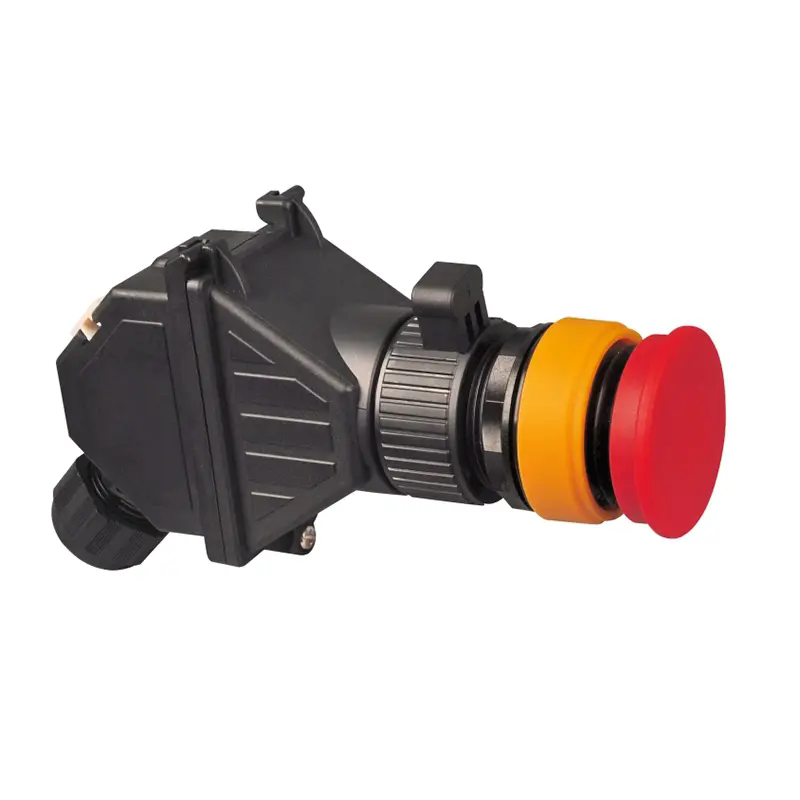
At their core, explosion proof buttons are designed with sealed housings and specialized contact mechanisms that isolate electrical sparks within a protective enclosure. This prevents any external flammable substance from igniting, even if the button is activated under load or while exposed to volatile compounds.
The central focus of this article is to explore the functionality, advantages, applications, and future trends of explosion proof buttons, providing a comprehensive understanding of why this technology has become indispensable in modern industry.
Why Explosion Proof Buttons Are Becoming a Global Industrial Standard
Safety standards across the world, such as ATEX (Europe), IECEx (International), UL (United States), and CSA (Canada), mandate explosion-proof control components in hazardous environments. These regulations have accelerated the global adoption of explosion proof buttons as a key part of equipment design. The benefits extend beyond compliance — they contribute to operational reliability, reduced downtime, and worker confidence.
Main Advantages of Explosion Proof Buttons
-
Enhanced Safety – Prevents ignition of explosive atmospheres caused by electrical sparks or heat.
-
Longer Service Life – Built with corrosion-resistant metals and high-durability polymers for extended operation in harsh environments.
-
Reduced Maintenance – Sealed designs protect against dust, water, oil, and chemicals, lowering maintenance frequency.
-
Versatile Functionality – Available in emergency stop, start/stop, and reset functions compatible with control panels and machinery.
-
Regulatory Compliance – Certified to international standards for use in hazardous zones 1, 2, 21, and 22.
-
Operational Stability – Maintains consistent performance across extreme temperatures and vibration conditions.
How Explosion Proof Buttons Work: Engineering for Reliability
Explosion proof buttons operate on a simple yet highly engineered principle — containment and isolation. The goal is not to prevent explosions entirely within the button, but to contain any ignition event so it cannot propagate to the surrounding atmosphere. This is achieved through precision mechanical design and specific materials.
Technical Specifications of Explosion Proof Buttons
| Parameter | Specification |
|---|---|
| Housing Material | Aluminum Alloy / Stainless Steel / Reinforced Plastic |
| Explosion Protection Grade | Ex d IIB / IIC T6, Ex tD A21 IP66 |
| Ingress Protection (IP) | IP65–IP68 (depending on model) |
| Rated Voltage | AC 220V / 380V; DC 24V / 48V |
| Rated Current | 10A, 16A, or customizable |
| Operating Temperature Range | -40°C to +80°C |
| Contact Configuration | 1NO, 1NC, 2NO, 2NC (custom options available) |
| Mounting Type | Panel / Wall / Modular Control Box |
| Color & Illumination Options | Red, Green, Yellow, Blue, White; LED optional |
| Certifications | ATEX, IECEx, UL, CE |
Each explosion proof button undergoes rigorous testing — including flame path verification, insulation resistance, mechanical endurance, and thermal stability — to guarantee safety even in the harshest operating conditions.
Working Principle in Detail
When pressed, the button actuates an internal switch mechanism enclosed within a flameproof housing. Any spark generated during the contact operation is confined inside the enclosure. The flame path — precisely machined narrow gaps between enclosure parts — cools down the hot gases before they escape, ensuring they are below ignition temperature when released into the atmosphere. This design ensures containment without compromising usability.
What the Future Holds: Smart Explosion Proof Buttons and Industrial Automation
The next generation of explosion proof buttons is moving toward digital integration and smart control interfaces. As Industry 4.0 expands, industrial automation demands components that combine safety, data monitoring, and connectivity.
Emerging Trends Include:
-
Smart Signal Feedback Systems: Built-in LED indicators and signal transmission for real-time status monitoring.
-
Wireless Communication Modules: Bluetooth or Zigbee-based designs for remote operation and diagnostics in hazardous areas.
-
Touch-Sensitive Explosion Proof Interfaces: Capacitive sensors designed for flameproof housings.
-
Integration with PLC and SCADA Systems: Enables centralized safety monitoring and predictive maintenance.
-
Sustainable Materials: Use of eco-friendly alloys and polymers for improved environmental performance.
These innovations aim to create a safer and more connected industrial environment, where equipment self-diagnoses and communicates maintenance needs before failures occur. The global explosion proof equipment market is expected to grow steadily due to these advancements, reflecting industries’ commitment to zero-incident operations.
Frequently Asked Questions (FAQ) About Explosion Proof Buttons
Q1: What environments require explosion proof buttons?
A1: Explosion proof buttons are essential in environments with flammable gases (Zone 1 & Zone 2) or combustible dust (Zone 21 & 22), such as oil refineries, chemical plants, gas stations, mining operations, and marine vessels.
Q2: What is the difference between explosion proof and intrinsically safe devices?
A2: Explosion proof devices contain explosions within their housings, while intrinsically safe devices limit the energy to a level incapable of causing ignition. Both meet safety requirements but apply to different system designs.
Q3: Can explosion proof buttons be customized for color or labeling?
A3: Yes. Manufacturers offer customizable options in color, label engraving, LED indication, and mounting type to meet specific control panel needs.
Q4: How long do explosion proof buttons typically last?
A4: Depending on usage and environmental exposure, high-quality explosion proof buttons can last over 10 years with minimal maintenance, especially when constructed with stainless steel or reinforced plastic.
Q5: Are explosion proof buttons waterproof?
A5: Most explosion proof buttons are rated IP65 to IP68, meaning they can resist water jets, dust ingress, and temporary submersion.
Q6: How do you test an explosion proof button?
A6: Testing includes flame path inspection, high-voltage insulation testing, temperature rise assessment, and mechanical endurance testing to verify durability and compliance with explosion protection standards.
Q7: What certifications should be checked before purchasing?
A7: Look for ATEX, IECEx, UL, and CE certifications to ensure compliance with international safety regulations.
Q8: Can explosion proof buttons be used outdoors?
A8: Yes. Their weather-resistant and corrosion-proof housings make them suitable for both indoor and outdoor hazardous installations.
Q9: How does temperature affect performance?
A9: Quality models are designed to operate in extreme temperatures ranging from -40°C to +80°C without affecting electrical or mechanical performance.
Q10: What is the maintenance process for explosion proof buttons?
A10: Routine visual inspection, checking for enclosure damage, seal integrity, and electrical contact condition ensures long-term safety. Lubrication and cleaning should only be done with non-conductive, non-flammable materials.
Why Choose Yuxuan Explosion Proof Buttons
As industries evolve, Yuxuan Explosion Proof continues to lead with innovation and precision manufacturing. The company’s explosion proof button series embodies reliability, compliance, and advanced engineering, suitable for diverse hazardous applications. Each product undergoes strict quality control under ISO and IECEx guidelines to ensure consistent performance in mission-critical environments.
Yuxuan focuses on designing user-friendly interfaces without compromising safety. With its deep expertise in industrial explosion protection technology, Yuxuan provides customized solutions that integrate seamlessly with both traditional and automated systems.
For detailed specifications, technical support, or custom solutions tailored to specific industrial needs, contact us to learn how Yuxuan Explosion Proof can enhance your safety and automation standards.