Abstract
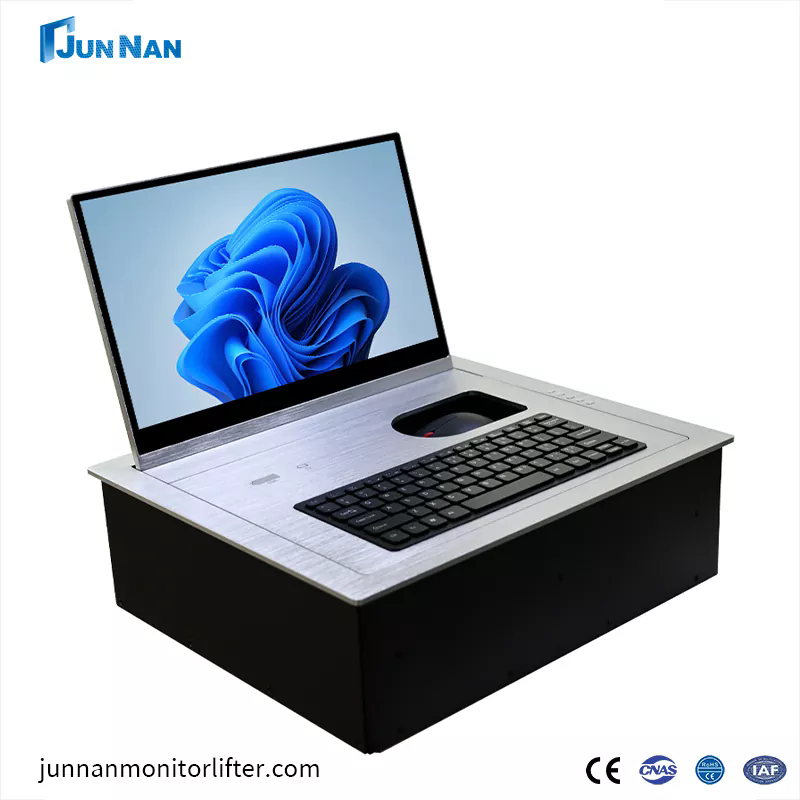
The LCD Monitor Flip-Flop mechanism is an innovative display mounting solution designed to improve flexibility, ergonomics, and operational efficiency in environments where screen accessibility and space optimization are critical. From industrial control rooms to commercial kiosks and smart retail systems, this technology addresses common issues such as limited viewing angles, mechanical instability, and inefficient workspace utilization. This article explores its structure, advantages, real-world applications, and installation considerations, providing a comprehensive guide for users and system integrators seeking a reliable monitor mobility solution.
Introduction
Modern display systems require far more than static positioning. In control centers, educational environments, medical facilities, and retail installations, users need displays that can adapt quickly to different viewing conditions. The LCD Monitor Flip-Flop mechanism introduces a dynamic structural design that allows monitors to rotate, tilt, and flip smoothly while maintaining stability and safety.
Unlike conventional fixed mounts, this system is engineered to support frequent movement without compromising durability. It enhances workflow efficiency by allowing users to reposition screens with minimal effort, reducing strain and improving interaction speed.
What is LCD Monitor Flip-Flop?
The LCD Monitor Flip-Flop is a mechanical mounting structure designed to enable controlled flipping and rotational movement of LCD screens. It typically integrates precision hinges, balanced support arms, and damping systems to ensure smooth motion.
This system is widely used in environments where screens must be shared between users or repositioned frequently. It eliminates the rigidity of traditional mounts by introducing controlled mobility while maintaining secure locking positions.
Key Features
-
360° Rotation Capability: Enables flexible viewing orientation.
-
Stable Locking Mechanism: Ensures the monitor stays fixed after adjustment.
-
Space-Saving Design: Reduces desktop and wall clutter.
-
High Load-Bearing Structure: Supports various LCD monitor sizes.
-
Smooth Flip Motion: Designed with damping technology to avoid abrupt movement.
-
Ergonomic Adjustment: Reduces neck and eye strain for users.
Pain Points It Solves
Traditional monitor mounts often fail to meet the demands of dynamic working environments. The LCD Monitor Flip-Flop addresses several common operational challenges:
-
Limited adjustability leading to poor viewing angles
-
Workspace congestion caused by fixed positioning systems
-
Frequent manual repositioning causing wear and instability
-
Inefficient collaboration due to static screen orientation
By solving these issues, the flip-flop system significantly enhances productivity and user comfort.
Applications
The LCD Monitor Flip-Flop system is widely adopted across multiple industries:
-
Industrial control and automation rooms
-
Medical diagnostic and monitoring stations
-
Retail digital signage and advertising displays
-
Educational training environments
-
Corporate meeting and collaboration rooms
Its adaptability makes it suitable for any scenario where screen flexibility and accessibility are essential.
Installation Guide
Proper installation is critical for ensuring stability and performance. The following steps outline a standard installation process:
-
Verify monitor compatibility with mounting bracket specifications.
-
Secure the base plate to a stable surface or wall structure.
-
Attach the flip-flop hinge mechanism to the monitor.
-
Connect the monitor assembly to the support arm.
-
Test rotational and flipping functions for smooth operation.
-
Adjust tension settings to match weight requirements.
Professional installation is recommended in high-usage environments to ensure long-term stability.
Traditional Mount vs Flip-Flop System
|
Feature
|
Traditional Mount
|
LCD Monitor Flip-Flop
|
|
Adjustability
|
Limited
|
High flexibility with multi-angle movement
|
|
Space Efficiency
|
Moderate
|
High optimization for compact setups
|
|
Durability
|
Standard
|
Reinforced mechanical structure
|
|
User Ergonomics
|
Basic comfort
|
Optimized for reduced strain
|
Maintenance Tips
To ensure long-term performance, regular maintenance is recommended:
-
Check hinge joints for wear every 3–6 months
-
Clean moving parts to prevent dust accumulation
-
Lubricate mechanical joints periodically
-
Verify locking mechanisms for secure positioning
Proper maintenance extends the lifespan of the system and ensures consistent performance in demanding environments.
FAQ
Q1: Is the LCD Monitor Flip-Flop compatible with all monitor sizes?
A1: It supports a wide range of LCD monitors, but compatibility depends on weight and VESA mounting standards.
Q2: Can it be installed on walls and desks?
A2: Yes, the system is designed for both wall-mounted and desktop configurations depending on the installation kit used.
Q3: Does frequent flipping affect durability?
A3: No, the mechanism is engineered for repeated motion cycles with reinforced hinge structures.
Q4: Is professional installation required?
A4: While not mandatory, professional installation is recommended for industrial or high-load applications.
Conclusion
The LCD Monitor Flip-Flop system represents a significant advancement in display mounting technology, combining flexibility, durability, and ergonomic benefits. Its ability to adapt to different viewing requirements makes it a valuable solution across industrial, commercial, and educational environments.
Guangzhou Junnan continues to develop and supply advanced display mounting solutions designed to meet evolving market demands. With a focus on structural precision and user-centric engineering, the company delivers products that enhance operational efficiency and workspace design.
For customized solutions, technical support, or product inquiries, please contact us at Guangzhou Junnan to explore how our LCD Monitor Flip-Flop systems can improve your display infrastructure.