

How Does Color Flow LED Neon Light Shape the Way Architectural and Commercial Lighting Is Designed?
2025-12-19
Article Summary
Color Flow LED Neon Light has emerged as a flexible lighting solution for architectural façades, commercial signage, retail environments, and creative installations. This article provides a comprehensive analysis of how Color Flow LED Neon Light works, what technical parameters define its performance, and how it is applied in real-world projects. By focusing on installation logic, control systems, durability standards, and design adaptability, the content aims to support informed decision-making for lighting designers, project planners, and procurement professionals.
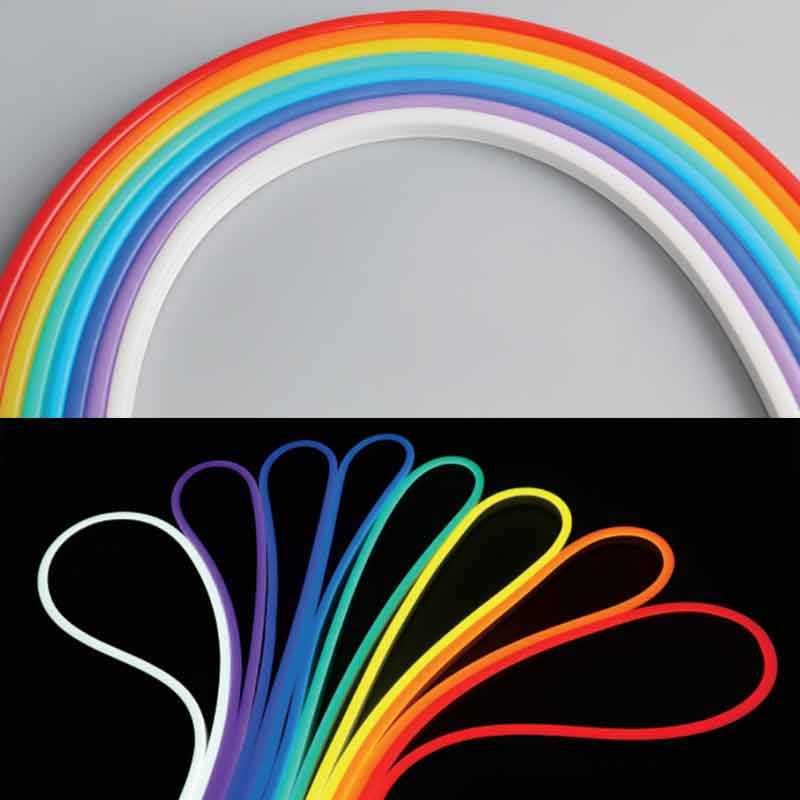
Table of Contents
- 1. Product Overview and Design Concept
- 2. Technical Parameters and Performance Standards
- 3. Application Scenarios and Installation Logic
- 4. Control Systems, Maintenance, and Industry Outlook
- Frequently Asked Questions
Outline
- Understanding the structural composition of Color Flow LED Neon Light
- Analyzing electrical, optical, and environmental parameters
- Exploring commercial, architectural, and creative use cases
- Evaluating control protocols and long-term operational value
1. Product Overview and Design Concept
Color Flow LED Neon Light is a linear lighting solution engineered to replicate the visual continuity of traditional glass neon while delivering digital color control and enhanced structural durability. Unlike conventional neon tubing, this product integrates flexible silicone or PVC diffusers with internally mounted addressable LED chips, allowing smooth color transitions and programmable lighting effects.
The central concept behind Color Flow LED Neon Light lies in its ability to combine aesthetic consistency with technical adaptability. The uniform light-emitting surface minimizes pixelation, ensuring visual coherence across long runs and complex curves. This makes it suitable for both functional illumination and expressive lighting design.
From a project perspective, Color Flow LED Neon Light is designed to support scalable deployment. It can be cut to specific lengths, bent along predefined radii, and installed across varied substrates such as concrete, metal, glass, and composite panels. These characteristics position it as a core lighting element in environments where visual identity and spatial definition are critical.
2. Technical Parameters and Performance Standards
The performance of Color Flow LED Neon Light is defined by a set of measurable parameters that directly influence brightness consistency, color accuracy, environmental resistance, and operational lifespan. Understanding these parameters is essential when specifying products for commercial or architectural use.
| Parameter | Specification Range | Practical Significance |
|---|---|---|
| Input Voltage | DC 12V / DC 24V | Determines power supply compatibility and voltage drop control |
| LED Type | Addressable RGB or RGBW | Enables dynamic color sequencing and individual segment control |
| Luminous Output | 600–1200 lm/m | Supports both decorative and visibility-oriented applications |
| Ingress Protection | IP65–IP68 | Ensures resistance to dust, moisture, and outdoor exposure |
| Bending Radius | ≥ 30 mm | Defines flexibility for curved and custom-shaped installations |
| Operating Temperature | -20°C to +50°C | Maintains stability across varied climate conditions |
These specifications illustrate how Color Flow LED Neon Light balances optical performance with mechanical resilience. Proper alignment between parameter selection and application requirements reduces maintenance frequency and enhances long-term operational stability.
3. Application Scenarios and Installation Logic
Color Flow LED Neon Light is widely adopted across multiple sectors due to its adaptability and controlled visual output. In architectural applications, it is often integrated into building outlines, façade accents, and structural contours to define spatial geometry during nighttime conditions.
Within commercial environments, such as retail storefronts and hospitality venues, Color Flow LED Neon Light is used to create recognizable visual elements that support branding without relying on conventional signage formats. The continuous illumination profile improves readability while maintaining a refined appearance.
Installation logic typically follows a modular approach. Mounting accessories are selected based on substrate material and exposure level. Power injection points are calculated according to run length to prevent voltage drop. Control lines are routed separately from power lines to reduce signal interference, especially in projects involving synchronized color transitions.
By aligning installation planning with product characteristics, project teams can achieve consistent output while minimizing rework and downtime.
4. Control Systems, Maintenance, and Industry Outlook
Control capability is a defining feature of Color Flow LED Neon Light. Most systems support protocols such as DMX512, SPI, or DALI, enabling integration into centralized lighting management platforms. This allows synchronized operation across multiple zones and facilitates scene-based programming.
From a maintenance standpoint, solid-state construction significantly reduces failure points compared to traditional neon. Encapsulated LED modules and sealed diffusers limit environmental degradation, while standardized connectors simplify segment replacement when required.
The broader lighting industry continues to prioritize solutions that combine visual impact with energy efficiency and digital control. Color Flow LED Neon Light aligns with this direction by offering programmable illumination within a durable linear format, supporting evolving architectural and commercial design requirements.
Frequently Asked Questions
How does Color Flow LED Neon Light achieve smooth color transitions?
Smooth transitions are achieved through addressable LED chips combined with diffused outer housings, allowing gradual blending between colors without visible segmentation.
How long can Color Flow LED Neon Light operate continuously?
When installed according to recommended electrical and thermal guidelines, continuous operation exceeding 50,000 hours is achievable under standard commercial conditions.
How is Color Flow LED Neon Light adapted for outdoor use?
Outdoor adaptation is ensured through high ingress protection ratings, UV-resistant materials, and sealed end caps that prevent moisture ingress.
References
- International Electrotechnical Commission (IEC) Lighting Standards
- Illuminating Engineering Society (IES) Technical Guidelines
- Architectural Lighting Design Best Practices
As a professional lighting solution provider, Kons Lighting continues to focus on delivering reliable and adaptable Color Flow LED Neon Light products that align with international standards and project-specific requirements. For detailed specifications, customization options, or technical consultation, interested parties are encouraged to contact us to discuss project needs and implementation strategies.