

How Does an Infrared Touch Display Improve User Interaction?
2026-03-31
Abstract: Infrared touch displays are revolutionizing the way people interact with digital interfaces. Unlike traditional touchscreens, infrared technology offers precise, responsive, and durable solutions suitable for various industries. This article explores the benefits, applications, and technical insights of infrared touch displays to help businesses make informed decisions.
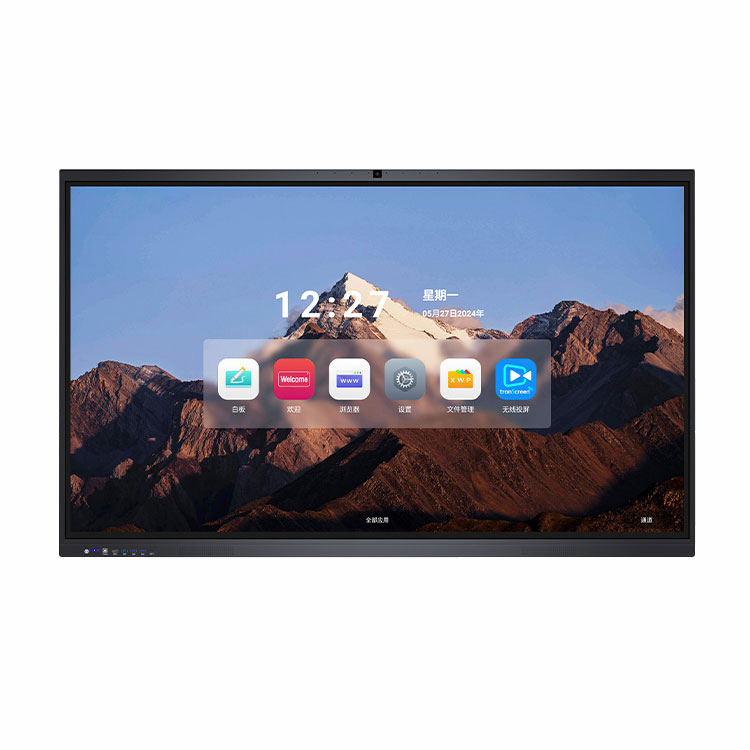
Table of Contents
- Introduction to Infrared Touch Displays
- How Infrared Touch Technology Works
- Key Advantages
- Applications Across Industries
- Installation and Maintenance Tips
- Frequently Asked Questions
- Conclusion
Introduction to Infrared Touch Displays
Infrared touch displays are an advanced type of interactive screen that detect touch through an invisible grid of infrared light beams. Unlike capacitive or resistive screens, they do not rely on physical pressure or electrical conductivity, which makes them highly reliable and durable. Cuhub, a leading provider of interactive display solutions, has been at the forefront of developing high-quality infrared touch technology for commercial, educational, and industrial applications.
How Infrared Touch Technology Works
Infrared touch displays function by creating a grid of infrared beams across the screen surface. When a finger or stylus interrupts these beams, the system calculates the exact coordinates of the touch. Key components include:
- Infrared LED emitters and detectors
- Microcontroller for touch detection
- High-resolution display panel
This design eliminates the need for screen overlays, improving clarity and touch sensitivity. Infrared touch screens can also support multi-touch functionality, making them ideal for collaborative work environments.
Key Advantages
Businesses often face challenges when selecting interactive displays. Infrared touch displays address these pain points effectively:
| Challenge | Infrared Touch Solution |
|---|---|
| Screen wear and tear | No pressure required; highly durable surface |
| Touch accuracy issues | Precise infrared detection, even with gloves or stylus |
| Multi-user interaction | Supports multiple simultaneous touches without lag |
| Environmental interference | Resistant to dust, moisture, and other external factors |
- Durability: Resistant to scratches and external damage.
- High Responsiveness: Instant touch detection improves workflow efficiency.
- Multi-touch Support: Enables collaborative work on large displays.
- Compatibility: Works seamlessly with various operating systems.
Applications Across Industries
Infrared touch displays are not limited to a single use case. Here are some common applications:
- Education: Interactive whiteboards for dynamic lessons and group learning.
- Retail: Self-service kiosks and interactive product catalogs.
- Hospitality: Digital check-in systems and interactive information points.
- Healthcare: Touch-enabled diagnostic screens and patient information systems.
- Industrial: Control panels in factories, warehouses, and production lines.
Cuhub provides tailored solutions for each sector, ensuring that businesses get the most out of their interactive technology investments.
Installation and Maintenance Tips
Proper installation ensures long-term performance. Consider the following:
- Mount the display on a stable surface or wall bracket suitable for its weight.
- Ensure the screen is free from direct sunlight to prevent infrared interference.
- Clean regularly with a soft, non-abrasive cloth to maintain sensitivity.
- Perform firmware updates as recommended by the manufacturer to enhance performance.
Following these guidelines minimizes downtime and enhances user experience.
Frequently Asked Questions
Q1: Can I use infrared touch displays outdoors?
A: Yes, but high ambient sunlight can interfere with the infrared sensors. Choose models specifically designed for outdoor use.
Q2: How many touch points does an infrared display support?
A: Most modern infrared displays support 10 to 32 touch points simultaneously, ideal for collaborative activities.
Q3: Are infrared touch displays compatible with all operating systems?
A: They are generally compatible with Windows, Linux, and Android systems. Always check specifications for Mac compatibility.
Q4: How long does the display last?
A: With proper care, infrared touch displays can last 7–10 years or more, depending on usage and environment.
Conclusion
Infrared touch displays are transforming the way people interact with technology. With benefits like high durability, precise touch detection, and multi-user support, they are ideal for various industries, from education to retail. Cuhub continues to innovate in this space, providing businesses with high-quality solutions that improve engagement and efficiency. Discover how an infrared touch display can elevate your operations today. Contact us for personalized assistance and product inquiries.