

How Does an Explosion-Proof Button Box Improve Safety in Hazardous Industrial Environments?
2026-03-16
Article Summary
Industrial environments such as oil refineries, chemical plants, mining facilities, and gas processing stations contain flammable gases, vapors, and dust that can easily ignite under unsafe electrical conditions. An Explosion-Proof Button Box is specifically engineered to prevent sparks or internal explosions from igniting the surrounding atmosphere. This article explains how these devices function, why they are essential for hazardous locations, how they solve common industrial safety concerns, and how to select the right model for long-term reliability and operational control.
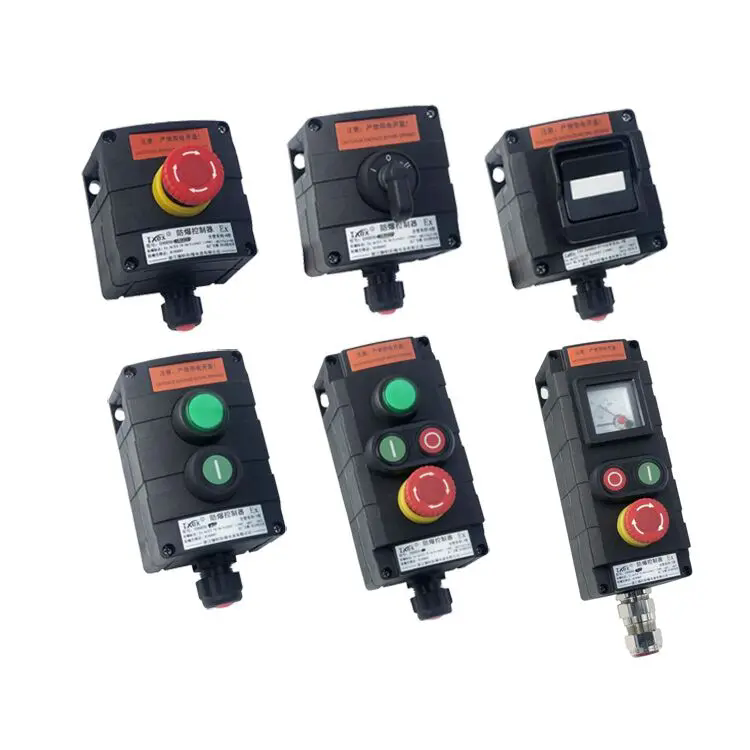
Table of Contents
- Understanding Explosion-Proof Button Boxes
- Why Hazardous Industries Require Explosion-Proof Control Equipment
- How an Explosion-Proof Button Box Works
- Main Structural Components
- Technical Parameters and Typical Specifications
- Common Industrial Applications
- Key Benefits for Industrial Safety
- How to Choose the Right Explosion-Proof Button Box
- Maintenance and Installation Considerations
- Frequently Asked Questions
- Conclusion
Article Outline
- Definition and purpose of explosion-proof control boxes
- Risk factors in hazardous industrial environments
- Working mechanism and protection principle
- Material structure and sealing design
- Technical parameters and performance features
- Industrial application scenarios
- Selection guide for buyers and engineers
- Maintenance and operational best practices
Understanding Explosion-Proof Button Boxes
An Explosion-Proof Button Box is an industrial control device designed for operation in hazardous environments where explosive gases or combustible dust may be present. These control stations allow operators to safely start, stop, or control machinery without exposing the surrounding environment to ignition sources.
Unlike conventional electrical control boxes, explosion-proof models are manufactured with reinforced housings, special sealing mechanisms, and internal spark containment designs. Even if an electrical fault or spark occurs inside the enclosure, the structure prevents flames or pressure from escaping and igniting the external atmosphere.
This design ensures safe operation in industries where even a minor electrical spark could trigger catastrophic accidents.
Why Hazardous Industries Require Explosion-Proof Control Equipment
Industries that process flammable materials face constant risks. In such environments, electrical equipment must be designed to eliminate ignition sources.
Common risk factors include:
- Flammable gas leaks
- Combustible dust accumulation
- High temperature equipment
- Electrical sparks during switching operations
- Static electricity discharge
Without explosion-proof equipment, standard switches or control stations could easily produce sparks during operation. These sparks can ignite volatile gases such as methane, propane, or hydrogen.
Explosion-proof button boxes provide a controlled interface for equipment operation while maintaining strict safety containment.
How an Explosion-Proof Button Box Works
The working principle of an explosion-proof button box relies on a combination of mechanical strength, flameproof enclosure design, and electrical insulation.
When a button is pressed, internal contacts complete or interrupt electrical circuits to control machinery. If a spark occurs inside the box, the enclosure prevents ignition of the surrounding environment.
The safety mechanism includes several protective features:
- Flameproof housing that withstands internal explosions
- Precision-machined flame paths that cool escaping gases
- High-strength metal or composite enclosure
- Sealed cable entries to prevent gas infiltration
- Corrosion-resistant surface treatment
These combined design elements ensure that even under abnormal conditions, ignition cannot propagate outside the enclosure.
Main Structural Components
An industrial explosion-proof button box typically includes several important structural elements.
| Component | Function |
| Explosion-proof enclosure | Contains internal sparks or pressure generated during electrical faults |
| Control buttons | Allow operators to start, stop, or control equipment safely |
| Sealed cable entry | Prevents gas infiltration through wiring connections |
| Flameproof joints | Cool and block flame propagation |
| Internal contact modules | Perform switching operations for industrial control circuits |
The overall structure is designed to maintain both mechanical strength and electrical safety even under harsh industrial conditions.
Technical Parameters and Typical Specifications
Explosion-proof button boxes are manufactured with various specifications depending on the application environment and control requirements.
| Parameter | Typical Value |
| Explosion protection type | Ex d IIB / IIC |
| Protection rating | IP65 / IP66 |
| Rated voltage | 220V / 380V |
| Rated current | 10A – 16A |
| Material | Aluminum alloy or stainless steel |
| Operating temperature | -20°C to 60°C |
These parameters allow the control box to perform reliably in demanding industrial conditions such as high humidity, corrosive environments, and heavy mechanical vibration.
Common Industrial Applications
Explosion-proof button boxes are widely used in industries where flammable substances are handled or stored.
- Oil and gas extraction facilities
- Petrochemical processing plants
- Natural gas compressor stations
- Coal mining operations
- Marine and offshore platforms
- Dust-prone manufacturing facilities
- Paint and solvent production plants
In these environments, safe and reliable control systems are essential to maintain operational efficiency and protect personnel.
Key Benefits for Industrial Safety
Using explosion-proof control equipment significantly reduces operational risks. A properly designed button box provides several advantages.
- Prevents ignition of flammable gases and dust
- Provides reliable equipment control in hazardous areas
- Improves workplace safety compliance
- Enhances durability in extreme environments
- Reduces downtime caused by electrical failures
These benefits make explosion-proof button boxes an essential part of modern industrial safety infrastructure.
How to Choose the Right Explosion-Proof Button Box
Selecting the correct model requires evaluating several important factors.
- Hazardous area classification
- Required number of control buttons
- Material compatibility with the environment
- Protection rating against dust and water
- Temperature and corrosion resistance
- Compliance with industrial safety standards
Manufacturers such as YXFB design explosion-proof control boxes that meet strict industrial requirements while maintaining flexible configurations for various applications.
Choosing a reliable supplier ensures long-term operational stability and consistent safety performance.
Maintenance and Installation Considerations
Even though explosion-proof button boxes are designed for durability, proper installation and maintenance remain critical.
- Install the box in accordance with hazardous area standards
- Ensure cable glands are properly sealed
- Regularly inspect flameproof joints
- Check button operation and electrical contacts
- Clean the enclosure surface to prevent corrosion
Routine inspections help maintain safety certification and prevent unexpected equipment failure.
Frequently Asked Questions
1. What makes a button box explosion-proof?
Explosion-proof button boxes are built with flameproof enclosures that contain internal sparks or explosions. The structure prevents flames from escaping and igniting the surrounding atmosphere.
2. Where are explosion-proof button boxes typically used?
They are widely used in hazardous locations such as oil refineries, chemical plants, gas pipelines, mining facilities, and dust-prone industrial environments.
3. How long does an explosion-proof button box last?
With proper installation and maintenance, industrial explosion-proof control boxes can operate reliably for many years even under harsh environmental conditions.
Conclusion
Explosion-proof button boxes play a crucial role in protecting industrial facilities operating in hazardous environments. Their specialized design prevents ignition sources, allowing operators to safely control machinery in areas where flammable gases or dust may exist.
High-quality products manufactured by YXFB combine robust construction, reliable electrical components, and strict safety standards to ensure dependable performance in demanding industrial applications.
If you are looking for a durable and certified explosion-proof control solution for your facility, contact us today to learn more about professional Explosion-Proof Button Box products and customized industrial safety solutions.