

Article Summary: A Transparent LED Display combines digital visual communication with the openness of glass, windows, curtain walls, and other architectural surfaces. Unlike conventional LED walls that can block natural light and views, transparent displays are designed to preserve visibility while delivering dynamic advertising, branding, information, and entertainment content. This article explains how Transparent LED Display technology works, its major advantages, application scenarios, installation considerations, performance factors, and selection criteria. It also examines how businesses can balance transparency, brightness, image quality, structural requirements, maintenance, and long-term operating costs when choosing a display solution.
Article Outline
- What Is a Transparent LED Display?
- How Does a Transparent LED Display Work?
- Why Are Transparent LED Displays Becoming Popular?
- Key Benefits of Transparent LED Display Technology
- Transparent LED Display vs. Conventional LED Display
- Where Can Transparent LED Displays Be Used?
- What Specifications Should Buyers Consider?
- How to Choose the Right Transparent LED Display
- Installation and Maintenance Considerations
- Common Problems and Practical Solutions
- Frequently Asked Questions
- Conclusion
Table of Contents
1. What Is a Transparent LED Display?
2. How Does a Transparent LED Display Work?
3. Why Are Transparent LED Displays Becoming Popular?
4. Key Benefits of Transparent LED Display Technology
5. Transparent LED Display vs. Conventional LED Display
6. Where Can Transparent LED Displays Be Used?
7. What Specifications Should Buyers Consider?
8. How to Choose the Right Transparent LED Display
9. Installation and Maintenance Considerations
10. Common Problems and Practical Solutions
1. What Is a Transparent LED Display?
A Transparent LED Display is a digital display system engineered to present bright, high-impact visual content while allowing a significant amount of light and visibility to pass through the display structure. It is particularly suitable for locations where a conventional solid LED screen would obstruct windows, architectural details, natural lighting, or the view behind the display.
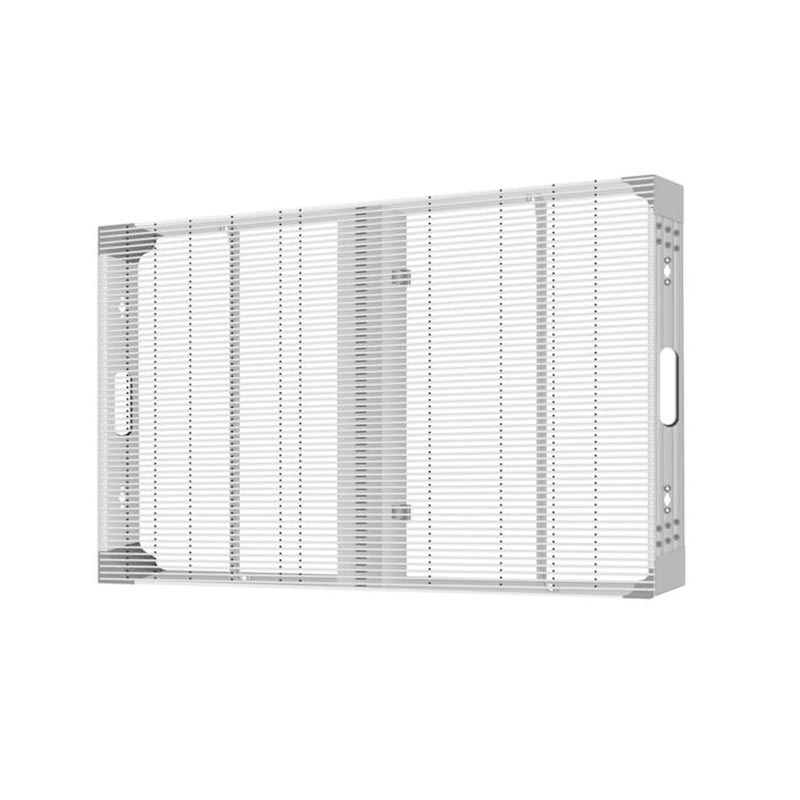
Instead of forming a completely solid visual surface, transparent LED products use carefully arranged LED modules, light strips, grille structures, film-based components, or other specialized configurations. The spaces between the luminous elements create visual permeability. When the display is operating, viewers see vivid images and video; when it is not displaying content, the underlying glass or architectural surface can remain substantially visible depending on the product design.
This characteristic makes transparent LED technology especially valuable for retail stores, shopping malls, airports, commercial buildings, exhibition spaces, museums, transportation facilities, and architectural façades. Businesses can turn otherwise unused glass surfaces into dynamic communication platforms without completely sacrificing the original function of the building.
Modern transparent display solutions can take several forms, including transparent LED screens, LED grille screens, transparent LED film screens, and flexible film-based displays. The appropriate design depends on the building structure, viewing distance, ambient lighting, desired transparency, content type, installation method, and maintenance requirements.
2. How Does a Transparent LED Display Work?
The operating principle is similar to other direct-view LED displays: individual LED pixels generate light according to electronic signals sent by a control system. The major difference lies in the physical arrangement of the LED components and supporting structure.
A conventional LED wall generally uses dense modules to create a relatively continuous display surface. A transparent display introduces openings or transparent areas between the luminous components. This reduces the amount of material covering the viewing area and allows light to travel through the screen.
The complete system normally includes several key components:
- LED pixels: Produce the visible red, green, and blue light used to create images and video.
- Display modules or light strips: Arrange the LEDs into a stable display structure.
- Receiving and control systems: Process video signals and coordinate content across the display.
- Power supply: Converts electrical power into the operating voltage required by the display system.
- Structural components: Secure the display to glass, façades, frames, walls, or other supporting surfaces.
- Software and media systems: Allow operators to schedule advertisements, videos, graphics, text, and other content.
Because transparent displays need to maintain a balance between image performance and visibility through the screen, pixel arrangement is an important design consideration. Increasing transparency can reduce the physical coverage of LEDs, while increasing pixel density generally improves image detail. The correct configuration therefore depends on the viewing distance and application rather than simply selecting the highest possible specification.
3. Why Are Transparent LED Displays Becoming Popular?
Many commercial buildings contain large areas of glass. These surfaces provide natural lighting, visibility, and architectural appeal, but they also represent valuable advertising and communication space. The challenge is that traditional signage can cover windows and interfere with the building's original design.
A Transparent LED Display addresses this problem by allowing the same architectural surface to serve multiple purposes. During normal operation, it can become a high-impact digital advertising platform. At the same time, the transparent construction can preserve a considerable degree of daylight and visibility.
This is particularly useful for businesses that want strong visual communication without creating a heavy, enclosed appearance. Retailers can promote products behind storefront glass, property developers can add media content to façades, airports can communicate passenger information, and exhibition organizers can create immersive visual environments without constructing a completely opaque video wall.
The technology also provides greater flexibility for creative architectural design. Depending on the product, transparent LED systems can be designed for large glass façades, curved surfaces, windows, building exteriors, commercial interiors, and other unusual environments.
4. Key Benefits of Transparent LED Display Technology
The main advantage of transparent LED technology is not simply that it can display video. Its real value comes from combining digital content with the existing architectural environment.
| Benefit | Practical Value |
|---|---|
| High transparency | Helps preserve daylight, views, and the visual character of glass architecture. |
| Lightweight construction | Can simplify transportation, handling, and installation compared with some conventional display structures. |
| Dynamic content | Supports video, animation, branding, advertising, announcements, and interactive visual content. |
| Architectural integration | Allows digital media to become part of the building rather than appearing as an independent billboard. |
| Flexible applications | Suitable for storefronts, curtain walls, façades, exhibitions, transportation hubs, and other environments. |
| Brand visibility | Creates large-format visual communication opportunities in high-traffic areas. |
Another important advantage is the potential to make better use of existing infrastructure. Instead of allocating additional floor space for a large digital billboard, a business may be able to use a window or glass façade that is already part of the property.
For premium commercial environments, this can create an attractive combination of architecture and digital media. The result is not simply a screen placed on a building, but a display system designed to work with the building's visual language.
5. Transparent LED Display vs. Conventional LED Display
Choosing between transparent and conventional LED technology depends heavily on the installation environment. Neither technology is universally better. The correct choice is the one that meets the project's visual, structural, and operational requirements.
| Factor | Transparent LED Display | Conventional LED Display |
|---|---|---|
| Transparency | Designed to allow light and visibility through the display. | Generally forms a solid visual surface. |
| Glass façades | Highly suitable for many glass-based applications. | May significantly obstruct the glass area. |
| Architectural integration | Designed to visually integrate with buildings. | Often requires a more substantial mounting structure. |
| Typical use | Storefronts, curtain walls, windows, creative façades, exhibitions. | Stages, billboards, indoor video walls, stadiums, large advertising surfaces. |
For a building with extensive glazing, a transparent solution may offer a better balance between advertising value and architectural function. For a solid wall where transparency is irrelevant, a conventional LED display may provide a more appropriate configuration.
6. Where Can Transparent LED Displays Be Used?
Transparent LED technology is particularly useful wherever businesses need digital communication without completely covering an existing surface.
- Retail storefronts: Turn glass windows into digital advertising platforms while maintaining a connection between the store interior and the street.
- Shopping malls: Promote campaigns, seasonal events, product launches, and brand messages across large glass areas.
- Commercial buildings: Use façades and architectural glazing for corporate communication and large-scale visual experiences.
- Airports and transportation hubs: Deliver advertising, information, branding, and wayfinding content in high-traffic environments.
- Hotels and entertainment venues: Create immersive digital experiences without introducing visually heavy structures.
- Exhibition centers: Build attractive displays that combine physical exhibits with dynamic digital content.
- Museums and cultural spaces: Add multimedia storytelling while preserving the surrounding architecture.
- Architectural façades: Transform buildings into nighttime visual landmarks while maintaining transparency during daytime operation.
- Automotive showrooms: Present vehicle launches and promotional content through large glass façades.
- Interior glass partitions: Add digital content to selected glass surfaces without creating a completely opaque partition.
Outdoor projects require additional attention to brightness, weather resistance, installation strength, ventilation, and maintenance accessibility. Indoor projects may prioritize transparency, viewing angle, pixel pitch, appearance, and low-profile installation.
7. What Specifications Should Buyers Consider?
Purchasing decisions should begin with the application rather than a single product specification. A display that performs well in one environment may be unsuitable in another.
| Specification | Why It Matters | What to Evaluate |
|---|---|---|
| Pixel pitch | Influences image detail and recommended viewing distance. | Viewing distance, content type, screen size. |
| Transparency | Determines how much light and visual information can pass through. | Window function, daylight requirements, architectural design. |
| Brightness | Determines whether content remains visible under ambient lighting. | Indoor or outdoor environment and direct sunlight. |
| Weight | Affects structural requirements and installation complexity. | Building structure and mounting method. |
| Viewing angle | Influences visibility from different positions. | Pedestrian flow and audience location. |
| Protection level | Important for displays exposed to dust, moisture, and weather. | Indoor/outdoor conditions and installation location. |
Transparency should receive particular attention. A very high transparency ratio may be attractive for architectural applications, but the final image performance must still meet the project's requirements. The goal is to find the appropriate balance between visibility through the display and visibility of the displayed content.
8. How to Choose the Right Transparent LED Display
Selecting a transparent display should be treated as a project engineering decision rather than simply a product purchase. The following process can help reduce the risk of selecting a configuration that does not perform as expected.
-
Define the installation environment.
Determine whether the screen will be installed indoors, outdoors, behind glass, directly on glass, on a façade, or within another architectural structure.
-
Measure the available area.
Record the exact width and height of the installation surface. Irregular shapes, columns, window frames, and access areas should also be considered.
-
Determine the viewing distance.
The expected audience distance should guide pixel pitch selection. A screen viewed from several meters away does not necessarily require the same pixel density as a display viewed at close range.
-
Evaluate ambient light.
Outdoor façades exposed to sunlight generally require different brightness performance from indoor retail displays.
-
Set the required transparency level.
Consider whether the audience needs to see clearly through the display, whether natural light must enter the building, and whether the display should visually disappear when switched off.
-
Check structural requirements.
Confirm the mounting method, available support points, wind exposure, access requirements, and load-bearing capacity before finalizing the product.
-
Consider maintenance.
Access to power supplies, control components, modules, cables, and other serviceable parts should be planned before installation.
-
Review the complete system.
A reliable display project requires more than LED modules. Control systems, power distribution, mounting components, content systems, ventilation, and installation services can all affect final performance.
ShenZhen Allenson Photoelectric Co., Ltd develops transparent LED display solutions for applications where digital communication must coexist with architectural openness. Its product range includes transparent display concepts designed for different architectural and commercial requirements, giving project owners more flexibility when planning glass-based digital media installations.
9. Installation and Maintenance Considerations
Even a high-quality Transparent LED Display can underperform if the installation is poorly planned. The mounting system must be matched to the building and the display's physical characteristics.
For glass curtain walls and storefronts, installers should carefully consider the position of the display relative to the glass, frame, structural members, ventilation paths, electrical connections, and maintenance access. For exterior installations, environmental conditions should be assessed before installation, including wind exposure, moisture, dust, temperature fluctuations, and direct sunlight.
Cable routing is another important issue. Poorly organized cables can affect appearance, maintenance efficiency, and system reliability. Power distribution should also be planned according to the actual system configuration rather than relying on assumptions based solely on screen size.
Routine maintenance should include visual inspection, checking electrical connections, cleaning appropriate surfaces, monitoring abnormal pixels, reviewing power supply performance, and verifying the control system. Outdoor displays may require more frequent inspection because they are exposed to environmental conditions.
One of the advantages of transparent display structures is that their lightweight and modular characteristics can simplify certain maintenance operations. However, accessibility should always be designed into the project from the beginning.
10. Common Problems and Practical Solutions
| Common Problem | Possible Cause | Recommended Approach |
|---|---|---|
| Content appears too dim | Ambient light is stronger than expected or brightness is insufficient. | Reassess brightness requirements and operating conditions. |
| Display blocks too much of the view | Transparency level or product structure may not suit the application. | Select a configuration with a more suitable transparency ratio. |
| Image lacks desired detail | Pixel pitch may be too large for the viewing distance. | Select an appropriate pixel pitch based on viewing distance. |
| Installation is difficult | Mounting conditions were not considered early enough. | Conduct site measurements and structural planning before production. |
| Maintenance takes too long | Service access was not incorporated into the installation design. | Reserve appropriate maintenance access and use modular serviceable components. |
Most display problems can be reduced through proper project planning. Rather than selecting a screen solely from a product catalog, buyers should provide the manufacturer with information about the installation environment, dimensions, viewing distance, brightness conditions, transparency requirements, and intended content.
11. Frequently Asked Questions
Q1: What is a Transparent LED Display?
A Transparent LED Display is a digital LED screen designed with an open or translucent structure that allows light and visibility to pass through the display. It is commonly used on glass windows, storefronts, curtain walls, and architectural façades.
Q2: Can a Transparent LED Display be installed on glass?
Yes. Certain transparent LED technologies are specifically designed for glass applications. Depending on the product, installation may involve a frame, mounting structure, adhesive film, or another specialized fixing method.
Q3: Does a Transparent LED Display completely block natural light?
No. Transparency is one of the main characteristics of this technology. The amount of light that can pass through depends on the display structure, pixel arrangement, product design, and selected transparency level.
Q4: Is a Transparent LED Display suitable for outdoor use?
Some models are designed for outdoor environments, but the exact suitability depends on environmental protection, brightness, structural installation, temperature, moisture, wind exposure, and other site conditions. Outdoor projects should be evaluated on a case-by-case basis.
Q5: What determines the image quality of a Transparent LED Display?
Image quality depends on several factors, including pixel pitch, LED performance, brightness, refresh characteristics, control system, content resolution, viewing distance, and ambient lighting.
Q6: Is a transparent screen better than a traditional LED screen?
It depends on the application. Transparent LED is particularly advantageous where preserving visibility, daylight, and architectural appearance is important. Traditional LED displays may be more appropriate for solid walls, stages, stadiums, and other applications where transparency is unnecessary.
Q7: How should pixel pitch be selected?
Pixel pitch should be selected according to viewing distance and content requirements. Close-view applications generally benefit from finer pixel configurations, while large outdoor displays viewed from farther away may use larger pixel pitches.
Q8: Can transparent LED displays be customized?
Many transparent display projects can be customized according to dimensions, installation method, transparency requirements, pixel configuration, brightness, and architectural conditions. The available customization depends on the specific product technology.
Q9: How long does a Transparent LED Display last?
The service life depends on LED quality, operating conditions, thermal management, installation environment, usage intensity, power quality, and maintenance. A suitable product should be selected according to the actual operating environment.
Q10: What information should I provide when requesting a quotation?
Useful information includes display dimensions, indoor or outdoor location, viewing distance, installation surface, transparency requirements, approximate brightness conditions, content type, preferred pixel pitch if known, and project quantity. Photos or drawings of the installation location can also help a manufacturer recommend a suitable configuration.
12. Conclusion
A Transparent LED Display provides a practical way to combine digital communication with modern architecture. By allowing light and views to pass through the display structure, it can transform glass storefronts, curtain walls, façades, exhibition spaces, and other architectural surfaces into dynamic digital media platforms without treating the screen as a completely separate structure.
The best solution depends on more than transparency alone. Pixel pitch, brightness, viewing distance, screen dimensions, structural conditions, installation method, environmental protection, maintenance accessibility, and content requirements should all be evaluated together.
For businesses, architects, system integrators, advertising companies, retailers, and building owners, the most effective approach is to begin with the installation environment and define the required visual and architectural performance before choosing the final display configuration.
ShenZhen Allenson Photoelectric Co., Ltd can provide transparent LED display solutions for different commercial and architectural scenarios. If you are planning a storefront display, glass curtain wall project, architectural façade, exhibition installation, or another transparent digital display application, discuss your project requirements with the manufacturer to determine the most suitable solution.
Ready to Build a More Engaging Glass Display?
Turn unused glass surfaces into powerful digital communication platforms while maintaining the architectural openness of your space. Share your project dimensions, installation environment, viewing distance, and display requirements with ShenZhen Allenson Photoelectric Co., Ltd for a suitable Transparent LED Display solution. For product information, customization options, and project assistance, contact us today and let our team help you create a display solution that combines visual impact, transparency, and practical performance.