

Article Summary: A Q36 HB3 LED Headlight Bulb Rechargeable LED Bulb for Car is designed for drivers looking to upgrade compatible HB3/9005 automotive lighting with a modern LED solution. The real value of an LED headlight is not simply a higher brightness figure. Correct bulb fitment, beam control, thermal management, electrical compatibility, installation position, and reliable operation all influence the final result. This guide explains how to identify the correct HB3 application, what to check before replacing a factory bulb, how rechargeable LED technology can be used in automotive lighting, and how to evaluate performance after installation.
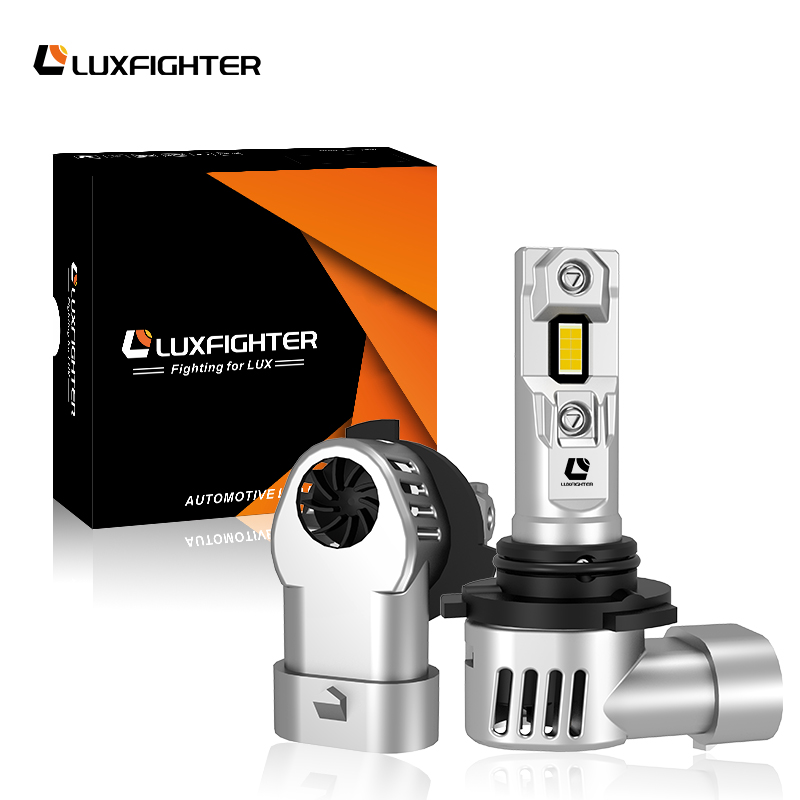
1. What the HB3 / 9005 Bulb Format Means
Before upgrading a vehicle's headlights, the first question should always be fitment. HB3 is commonly cross-referenced with 9005, and this bulb family is widely associated with high-beam applications. However, the lighting position can vary between vehicle models, so the bulb number alone should not be treated as a complete compatibility check.
This distinction is important because automotive lighting housings are designed around a specific bulb position, socket, reflector or projector geometry, and electrical system. A bulb that physically fits the socket may still produce an unsatisfactory light pattern if its light-emitting position does not match the original optical design.
2. What Makes the Q36 Design Practical for Car Lighting
The Q36 HB3 LED Headlight Bulb Rechargeable LED Bulb for Car is positioned around a simple customer requirement: obtaining a modern LED lighting solution without turning a routine bulb replacement into a complicated vehicle modification.
For drivers, the most noticeable difference between older halogen lighting and a well-designed LED replacement can be the character of the illumination. LED technology can provide a clean, consistent light source in a compact package, while the bulb structure can be engineered around the available space inside the original headlight housing.
For distributors and automotive lighting buyers, the product needs to be considered from another perspective. A commercially useful LED bulb should have consistent manufacturing quality, stable electrical operation, suitable thermal design, accurate dimensions, reliable connectors, and clear application information. These factors reduce installation complaints and make the product easier to introduce into different markets.
3. The Main Performance Factors That Matter
A common mistake when comparing LED headlight bulbs is to focus almost entirely on the advertised lumen number. In actual driving conditions, usable illumination depends on several elements working together.
| Factor | Why It Matters | What Buyers Should Check |
|---|---|---|
| Bulb Fitment | The bulb must match the original socket and intended lighting position. | HB3 / 9005 designation and vehicle application. |
| Beam Pattern | Determines how efficiently light is distributed on the road. | Light source position, bulb orientation and housing compatibility. |
| Thermal Management | LED components generate heat that must be controlled for stable operation. | Heat sink, fan or passive cooling structure and available housing space. |
| Electrical Compatibility | Some vehicles may detect differences between LED and original halogen loads. | Connector design, power requirements and possible dashboard warnings. |
| Mechanical Quality | A precise base and secure locking system help prevent movement after installation. | Base dimensions, locking tabs and overall construction. |
The best evaluation method is therefore broader than asking how bright a bulb is. The more useful question is whether the bulb delivers stable and controlled illumination in the exact headlight assembly where it will be installed.
4. How Rechargeable LED Technology Fits Automotive Use
The term “rechargeable” can create confusion in automotive lighting because conventional vehicle headlights normally receive electrical power directly from the vehicle's electrical system. Therefore, buyers should verify exactly how a particular rechargeable LED bulb is configured rather than assuming that every rechargeable model operates in the same way.
From a product-design perspective, rechargeable functionality can be useful where the lighting product incorporates an internal energy-storage or portable operating concept. The key issue is ensuring that the charging method, operating duration, electrical interface, and installation environment are appropriate for the intended vehicle application.
For professional buyers, this information should be clearly documented before placing an order. Product specifications should explain the power architecture, charging requirements, operating conditions, and vehicle compatibility. Clear technical documentation is particularly important when an automotive lighting product is being distributed through multiple countries.
5. How to Check Vehicle Compatibility Before Installation
Compatibility should be confirmed before the old bulb is removed. This saves time and helps prevent the common situation where a replacement bulb fits physically but does not work correctly with the vehicle.
- Confirm the bulb number. Check whether the original application specifies HB3 or 9005.
- Confirm the lighting function. Determine whether the bulb is used for high beam, low beam, DRL or another forward-lighting function on the specific vehicle.
- Check available rear clearance. The headlight housing may have limited space behind the bulb.
- Check the connector. Confirm that the electrical connection corresponds to the intended vehicle application.
- Check the housing design. Projector and reflector systems can behave differently with aftermarket LED light sources.
- Check local regulations. Road-use requirements for replacement headlamps differ between markets.
This process is particularly important for wholesalers and distributors. Rather than marketing an HB3 LED bulb as a universal replacement, it is more accurate to provide a vehicle compatibility list and explain the conditions under which the product should be used.
6. How to Install an HB3 LED Headlight Bulb Correctly
HB3/9005 LED bulbs generally use the vehicle's existing bulb mounting position. Installation normally begins by switching off the vehicle and allowing the lighting assembly to cool. The factory bulb is then disconnected, unlocked and removed before the replacement LED bulb is positioned in the socket.
- Switch off the vehicle and lighting system.
- Open the hood and locate the rear of the headlight assembly.
- Remove the dust cover if the housing uses one.
- Disconnect the original bulb connector carefully.
- Unlock the original bulb by rotating it according to the socket design.
- Remove the old bulb without damaging the housing or connector.
- Align the tabs on the Q36 HB3 LED bulb with the matching slots.
- Insert and rotate the bulb until it is securely locked.
- Connect the electrical interface according to the product instructions.
- Switch on the lighting system and inspect the illumination before closing the housing completely.
Installation guides for 9005/HB3 LED products commonly emphasize correct tab alignment and secure rotation into the factory socket. Some products also recommend a particular LED-chip orientation to achieve a more controlled beam pattern.
7. Why Beam Pattern Matters More Than Brightness Alone
Headlight performance is ultimately about where the light goes. A high-output LED bulb can still produce poor real-world results if the light-emitting elements are positioned incorrectly inside the original optical system.
Beam control becomes especially important in headlights used on public roads. A properly controlled beam helps place illumination where the driver needs it while limiting unwanted light in directions that can create glare for other road users.
Automotive lighting installation documentation commonly recommends checking the final beam pattern after installation rather than relying only on the physical fit of the bulb. Philips documentation for HB3/HB4 LED applications specifically discusses bulb orientation and the importance of maintaining an appropriate low-beam cutoff where applicable.
After installing the Q36 bulb, park the vehicle on level ground and inspect the beam against a suitable wall or test surface. If the beam appears scattered, unusually high, sharply misaligned or significantly different between the two sides, the bulb position and headlight aim should be checked before normal night driving.
8. How Heat Management Affects LED Headlight Performance
LEDs are efficient light sources, but they are not heat-free. Electrical energy is converted into light and heat, and the thermal energy needs to move away from the LED components and driver electronics.
This is why the rear structure of an LED headlight bulb deserves attention. Depending on the product, heat may be managed through an aluminum heat sink, thermal conduction structure, fan-assisted cooling, or another engineered solution.
Installation space also matters. A cooling structure that works well in an open test environment may have less airflow once enclosed inside a compact headlight housing. Therefore, the product dimensions and vehicle housing clearance should be checked together.
9. How to Maintain LED Headlight Performance
An LED headlight does not require frequent bulb replacement in the same way as a traditional filament lamp, but the surrounding lighting system still needs attention.
- Keep the headlight lens clean and free from heavy oxidation.
- Make sure the rear dust cover is correctly installed after bulb replacement.
- Check connectors for looseness, corrosion or visible damage.
- Inspect the bulb position if the beam pattern changes after driving on rough roads.
- Keep cooling components clear of unnecessary obstructions.
- Check for flickering, warning messages or intermittent operation.
- Verify both sides of the vehicle have a consistent beam position.
If a headlight begins flickering or produces an unexpected dashboard warning, the problem should not automatically be blamed on the LED chip itself. The connector, vehicle electronics, grounding, power supply and compatibility of the replacement bulb should all be checked.
10. HB3 LED vs. Traditional Halogen Lighting
Halogen remains a familiar automotive lighting technology, but LED replacement bulbs have become increasingly common in aftermarket automotive lighting. The two technologies differ fundamentally in how they generate light.
| Feature | Traditional Halogen | HB3 LED Bulb |
|---|---|---|
| Light Source | Heated filament | LED semiconductor light source |
| Physical Format | Established factory bulb format | Designed to fit compatible factory bulb positions |
| Heat Characteristics | Significant heat from the filament | Heat concentrated around LED and driver components |
| Light Appearance | Typically warmer | Often designed for a cleaner white appearance |
| Replacement Consideration | Straightforward when matching the original specification | Requires attention to fitment, beam pattern and electrical compatibility |
The key point is that replacing halogen with LED should not be treated as a simple brightness upgrade. The replacement needs to work with the optical and electrical characteristics of the vehicle. A correctly installed bulb with controlled light distribution can be more useful than a product selected only because its advertised output number is higher.
11. What Buyers Should Look for When Sourcing Q36 HB3 LED Bulbs
For individual vehicle owners, fitment and installation are usually the main concerns. For automotive parts wholesalers, retailers and importers, the purchasing decision is broader. Product consistency and after-sales support can directly affect customer satisfaction.
Clear Product Identification
The bulb model, HB3/9005 designation, application and electrical information should be presented clearly. This makes it easier for distributors to build accurate product listings and reduces incorrect orders.
Consistent Manufacturing
LED bulbs sold in batches should maintain consistent dimensions, connectors, LED positioning and overall construction. Consistency is especially important for buyers supplying multiple vehicle applications.
Technical Support
Fitment questions are common in automotive lighting. A supplier that can provide installation instructions, product specifications, application information and troubleshooting guidance gives distributors a practical advantage.
Packaging and Private-Label Requirements
For B2B buyers, packaging, labeling, manuals and product identification may need to match a particular market or sales channel. These requirements should be confirmed before mass production rather than after the goods are ready for shipment.
12. Frequently Asked Questions
Is HB3 the same bulb type as 9005?
HB3 and 9005 are commonly used as cross-reference designations for the same bulb family. However, the exact vehicle application should still be checked because different vehicles can use the bulb in different lighting positions.
Can the Q36 HB3 LED bulb replace a halogen bulb?
It can be used as a replacement where the vehicle is designed for the corresponding HB3/9005 application and the LED product is compatible with the housing and electrical system. Always confirm the exact vehicle fitment before installation.
Why does LED bulb orientation matter?
The position of the LED light source affects how the original reflector or projector distributes light. Many 9005/HB3 LED installation guides recommend positioning the LED elements horizontally, commonly around the 3 o'clock and 9 o'clock positions, although the correct final position depends on the specific headlight design.
Will an HB3 LED bulb fit every vehicle that uses HB3?
Not necessarily. The bulb base may be standardized, but rear clearance, dust-cover space, electrical characteristics, optical housing design and the intended lighting function can differ between vehicles.
Why does my LED headlight flicker after installation?
Flickering can be related to electrical compatibility, vehicle monitoring systems, connectors, power supply characteristics or the LED driver. Check the product instructions and vehicle compatibility before changing wiring or adding electrical components.
Does a brighter LED bulb always provide better road visibility?
No. Useful road illumination also depends on beam control, optical alignment, bulb positioning and headlight aim. Excessive uncontrolled light can create glare without improving useful visibility.
What should I check after installing the bulb?
Check that the bulb is securely locked, the connector is properly connected, both sides illuminate consistently, there are no warning messages, and the beam pattern is correctly positioned. Headlight aim should also be checked when appropriate.
Can automotive lighting distributors order Q36 HB3 LED bulbs in bulk?
B2B buyers can discuss quantity, packaging, labeling, technical specifications and other supply requirements directly with the supplier. Exact production and customization conditions should be confirmed according to the requested order.
13. A More Practical Way to Evaluate an HB3 LED Upgrade
Choosing an automotive LED bulb does not have to be complicated. Start with the original bulb specification, then work through physical fitment, electrical compatibility, optical performance and thermal conditions. Once those fundamentals are confirmed, product features such as rechargeable functionality, appearance and packaging can be evaluated according to the actual application.
For the Q36 HB3 LED Headlight Bulb Rechargeable LED Bulb for Car, the most important point is to view the product as part of the complete headlight system rather than as an isolated light source. The socket, housing, reflector or projector, wiring, cooling structure and final beam aim all contribute to the result.
This approach is also useful for professional buyers. Instead of comparing products only by advertised brightness, procurement teams can evaluate dimensions, application range, construction, thermal design, electrical requirements, packaging and supplier support. That creates a clearer basis for selecting products for different vehicle markets.
Looking for a Reliable HB3 LED Headlight Bulb Supplier?
Zhuhai Zhengyuan Optoelectronic Technology Co., Ltd. provides automotive lighting products for customers looking for practical LED headlight solutions and professional supply support. If you are sourcing Q36 HB3 LED Headlight Bulb Rechargeable LED Bulb for Car for wholesale, distribution, project supply or customized requirements, discuss your specifications with the team before placing your order.
Tell us your target vehicle applications, required quantity, packaging requirements and technical specifications, and we can help you evaluate the appropriate product configuration.
Contact Us