

Abstract: Plasma balls are captivating devices that have fascinated science enthusiasts and casual observers alike. They combine physics, electricity, and mesmerizing visual effects to create an interactive experience. This article explores how plasma balls operate, their applications, safety considerations, and tips for maximizing their appeal, especially in educational and decorative settings. By understanding the technology behind plasma balls, users can enjoy both their aesthetic beauty and scientific intrigue.
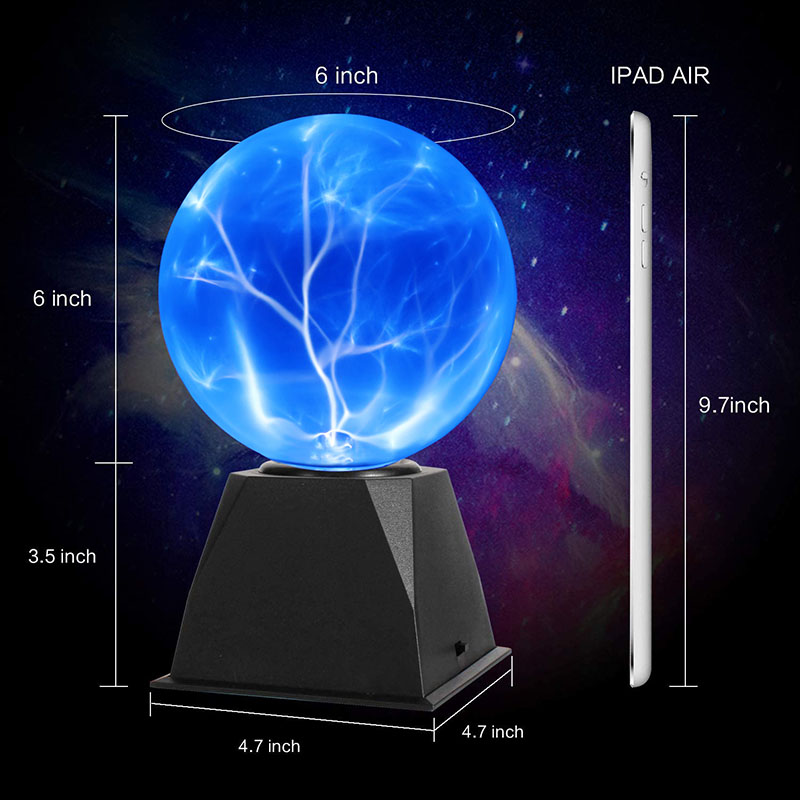
Table of Contents
- Introduction to Plasma Balls
- The Science Behind Plasma Balls
- Key Components
- Applications and Uses
- Safety Considerations
- Maintenance Tips
- Frequently Asked Questions
- Conclusion
Introduction to Plasma Balls
Plasma balls are interactive devices that produce colorful streams of plasma inside a glass sphere. Popularized in the late 20th century as a novelty item, they are now widely used in educational demonstrations, home decoration, and interactive displays. A typical plasma ball reacts to touch, creating a unique visual effect that demonstrates basic electrical principles in a safe and captivating way.
The Science Behind Plasma Balls
At the core, a plasma ball operates by ionizing gas inside a glass sphere. Here’s how it works:
- Electric Field: A high-voltage electrode is placed at the center of the glass sphere. This electrode generates an alternating current, producing a strong electric field.
- Ionization of Gas: The gas inside (often a mix of noble gases like neon, argon, and xenon) becomes ionized when exposed to the high voltage. Electrons in the gas atoms are excited to higher energy levels.
- Plasma Streamers: Ionized gas forms visible plasma filaments that extend from the central electrode to the glass surface. These filaments follow the path of least resistance and react dynamically to the proximity of fingers or other conductive objects.
This interaction illustrates principles such as conductivity, electric discharge, and ionization, making plasma balls not only decorative but also educational tools.
Key Components
Understanding the components helps in both appreciating the science and troubleshooting issues:
| Component | Function |
|---|---|
| Glass Sphere | Encases the noble gas and allows observation of plasma filaments. |
| Central Electrode | Generates high-voltage alternating current to ionize the gas. |
| Noble Gas Mixture | Neon, argon, xenon, or a mix that emits colored plasma when ionized. |
| Base and Electronics | Contains the circuitry that converts standard electrical current into high-frequency AC for plasma generation. |
Applications and Uses
Plasma balls are not just for fun—they have practical and decorative uses:
- Educational Demonstrations: Physics teachers use plasma balls to illustrate concepts like electric discharge, ionization, and electromagnetic fields.
- Home Decor: They serve as unique light fixtures, adding a futuristic or sci-fi aesthetic to rooms.
- Interactive Entertainment: Museums, science centers, and tech exhibitions employ plasma balls to engage visitors through touch-sensitive displays.
- Photography and Videography: Their dynamic plasma streams make captivating visual subjects for artistic projects.
Safety Considerations
Although plasma balls are generally safe, observing these precautions ensures worry-free use:
- Do not touch the glass for extended periods; the surface can become warm.
- Keep away from sensitive electronic devices as the electromagnetic field may interfere with them.
- Use only in dry environments; avoid moisture contact to prevent electrical hazards.
- Always supervise children during interactive demonstrations.
Maintenance Tips
Proper care extends the life and performance of your plasma ball:
- Clean the glass surface gently with a microfiber cloth to maintain visibility of plasma streams.
- Check electrical connections periodically to prevent short circuits.
- Avoid dropping or striking the glass sphere to prevent breakage.
- Store in a stable location away from direct sunlight to prevent color fading of gases over time.
Frequently Asked Questions
- Can touching the plasma ball harm me?
- No, it is safe for brief contact. The voltage is high but the current is very low, preventing injury.
- Why do plasma filaments follow my fingers?
- Your body conducts electricity slightly and changes the electric field inside the sphere, drawing plasma streams toward your hand.
- Can I use a plasma ball for long periods?
- Yes, but prolonged continuous use may cause the device to warm. Allow it to cool periodically to maintain longevity.
- What makes the colors of plasma different?
- The type and mixture of gases inside the sphere determine the colors. Neon produces red-orange, argon produces blue-purple, and xenon produces light blue.
Conclusion
Plasma balls are more than just decorative novelties—they are interactive educational tools that demonstrate fascinating principles of electricity and physics. By understanding the science, components, and safety considerations, users can fully enjoy their visual and educational value. Companies like Dongguan City REDIGLE provide high-quality plasma balls that blend scientific intrigue with aesthetic appeal.
Explore the latest models and learn more about plasma balls by visiting Dongguan City REDIGLE Plasma Ball. For any inquiries, product customization, or bulk orders, contact us today and bring a spark of science into your environment!