

How Does a Flat Panel Lighting Guide Plate Improve Modern Lighting Performance?
2026-02-05
Article Abstract
Flat panel lighting systems are widely adopted in commercial, industrial, and architectural applications due to their slim profile, uniform illumination, and energy efficiency. At the core of these systems lies the flat panel lighting guide plate, a critical optical component that directly affects brightness distribution, visual comfort, and product lifespan. This article provides a comprehensive explanation of how a flat panel lighting guide plate works, the problems it solves for end users, and the key factors to consider when selecting or customizing one for different lighting scenarios.
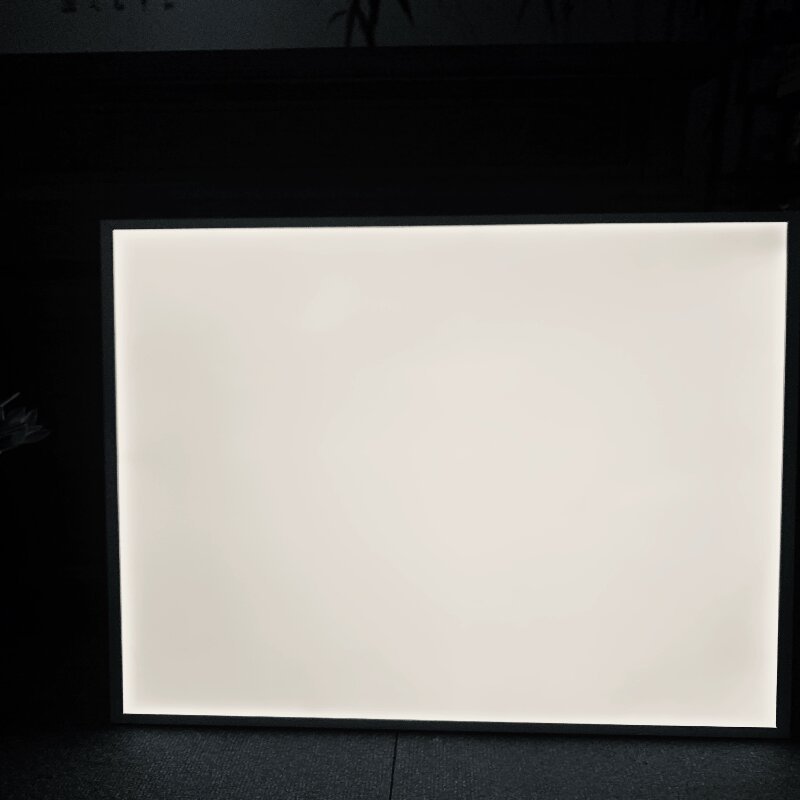
Table of Contents
- Overview of Flat Panel Lighting Guide Plate Technology
- Key Customer Pain Points in Flat Panel Lighting
- How a Flat Panel Lighting Guide Plate Works
- Main Types and Structures of Guide Plates
- Material Selection and Optical Performance
- Application Scenarios and Use Cases
- Technical Parameters at a Glance
- Quality Control and Manufacturing Considerations
- Frequently Asked Questions
- Conclusion and Business Cooperation
Overview of Flat Panel Lighting Guide Plate Technology
A flat panel lighting guide plate, also referred to as a light guide plate (LGP), is an optical-grade panel designed to distribute light evenly across a large surface area. It redirects light emitted from edge-mounted or back-mounted LED sources through precision-engineered microstructures, converting point or line light sources into uniform surface illumination.
In modern lighting systems, the guide plate is not an auxiliary part but a core functional component. Its optical design determines whether a lighting panel achieves consistent brightness, low glare, and long-term stability.
Key Customer Pain Points in Flat Panel Lighting
Many buyers encounter performance and reliability issues when selecting flat panel lighting products. These challenges are often directly related to the quality and design of the lighting guide plate.
- Uneven brightness causing visual fatigue
- Dark zones or hotspots near LED sources
- Low light utilization efficiency
- Yellowing or deformation over time
- Inconsistent quality between batches
Understanding how a flat panel lighting guide plate addresses these pain points helps decision-makers avoid costly replacements and performance complaints.
How a Flat Panel Lighting Guide Plate Works
The working principle of a flat panel lighting guide plate is based on controlled light refraction and reflection. Light enters the guide plate from LEDs positioned along one or more edges. Internal micro-dot patterns or laser-etched structures redirect the light toward the surface.
As light travels across the plate, these structures gradually adjust light output intensity, compensating for natural light attenuation. The result is a balanced luminance distribution across the entire panel.
This process ensures that users experience soft, uniform lighting without visible light source points, making it suitable for environments that require visual comfort and precision.
Main Types and Structures of Guide Plates
Flat panel lighting guide plates can be categorized according to their structure and manufacturing method.
- Edge-lit guide plates with dot-pattern distribution
- Back-lit guide plates with diffusion optimization
- Laser-etched guide plates for high-precision applications
- Printed guide plates for cost-sensitive projects
Each structure serves different illumination goals, from ultra-thin panels to high-lumen commercial lighting solutions.
Material Selection and Optical Performance
Material choice significantly influences optical efficiency and durability. Optical-grade PMMA and polycarbonate are commonly used due to their high light transmittance and dimensional stability.
Advanced material processing allows manufacturers such as Guangdong Jin Mingwei Photoelectric Technology Co., Ltd. to optimize clarity, impact resistance, and aging performance, ensuring long-term consistency under continuous operation.
Application Scenarios and Use Cases
Flat panel lighting guide plates are widely applied across multiple industries.
- Commercial offices and conference rooms
- Educational and healthcare facilities
- Retail displays and signage lighting
- Industrial clean rooms and laboratories
- Residential ceiling and wall panels
In each scenario, customized optical design improves lighting quality while reducing energy consumption.
Technical Parameters at a Glance
| Parameter | Typical Range |
|---|---|
| Light Transmittance | 92% – 95% |
| Thickness | 1.5 mm – 6 mm |
| Material | Optical-grade PMMA / PC |
| Surface Treatment | Laser-etched or printed microstructures |
| Operating Temperature | -20°C to 80°C |
Quality Control and Manufacturing Considerations
Consistent performance requires precise tooling, stable material sourcing, and strict inspection standards. Dimensional accuracy, dot pattern uniformity, and optical clarity must be controlled throughout production.
Manufacturers with integrated design and production capabilities are better positioned to provide reliable customization and scalable supply for long-term projects.
Frequently Asked Questions
What determines the uniformity of a flat panel lighting guide plate?
Uniformity is mainly influenced by dot pattern density, material clarity, and LED placement. Precise optical design ensures balanced light output.
Can guide plates be customized for different panel sizes?
Yes, guide plates can be tailored in size, thickness, and optical pattern to match specific lighting requirements.
How does a high-quality guide plate improve energy efficiency?
By maximizing light utilization and minimizing loss, a well-designed guide plate reduces the number of LEDs required to achieve target brightness.
Conclusion and Business Cooperation
A flat panel lighting guide plate is a decisive factor in achieving reliable, uniform, and comfortable lighting performance. From optical structure to material selection, every detail influences the final user experience and operational cost.
With extensive experience in optical component manufacturing, Guangdong Jin Mingwei Photoelectric Technology Co., Ltd. provides stable, customizable flat panel lighting guide plate solutions for diverse applications. For project consultation, technical specifications, or customized development, contact us to explore how optimized lighting guide plate technology can enhance your next lighting project.