

How Does a Distortionless Lens Improve Precision Imaging?
2026-04-15
Abstract:
In high-precision imaging applications, even minor lens distortion can lead to measurement errors, blurred edges, and unreliable visual data. A distortionless lens is engineered to eliminate image warping, ensuring straight lines remain straight and object dimensions remain accurate across the entire field of view. This article explains how distortionless lenses work, why they matter in industrial and scientific applications, and how to choose the right one for your imaging system. Whether you work in machine vision, metrology, medical imaging, or automation, understanding distortionless optics can significantly improve imaging accuracy and system efficiency.
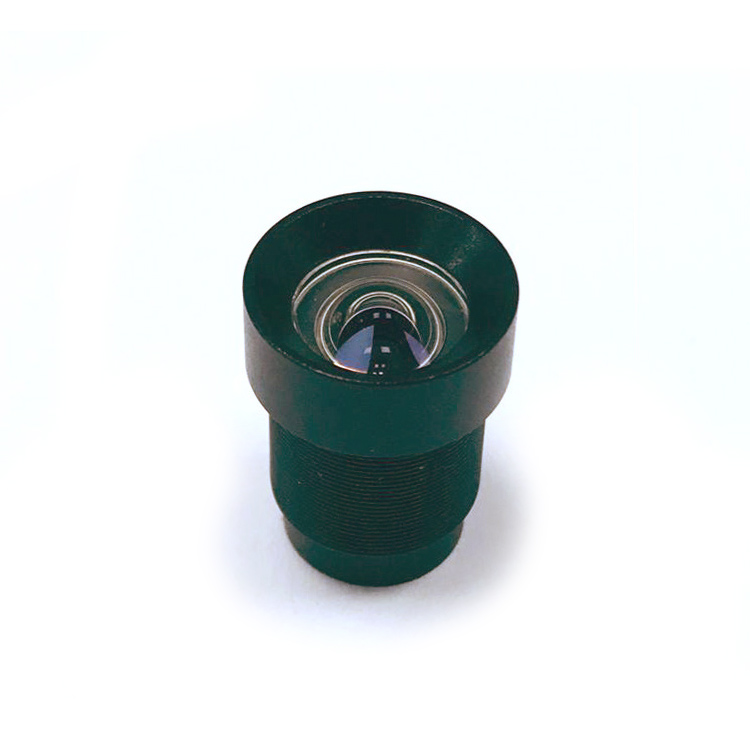
Table of Contents
- What Is a Distortionless Lens?
- Why Does Lens Distortion Matter?
- How Does a Distortionless Lens Work?
- Key Applications of Distortionless Lenses
- Major Benefits for Users
- How to Choose the Right Distortionless Lens
- Comparison Table: Standard Lens vs Distortionless Lens
- Maintenance and Performance Tips
- FAQ
- Conclusion
What Is a Distortionless Lens?
A distortionless lens is a specialized optical lens designed to minimize or eliminate geometric distortion in captured images. In ordinary lenses, straight lines near image edges may appear curved due to barrel or pincushion distortion. This effect can compromise measurement accuracy and reduce visual reliability.
Distortionless lenses are carefully engineered using advanced optical correction designs so that image geometry remains true to the original object. This makes them essential in environments where dimensional precision is critical.
For industries requiring exact imaging standards, BOSHI provides high-performance distortionless lens solutions tailored for demanding applications.
Why Does Lens Distortion Matter?
Lens distortion creates several operational challenges:
- Inaccurate dimensional measurements
- Misaligned machine vision detection results
- Reduced edge sharpness near frame borders
- Complications in automated inspection systems
- Errors in calibration-sensitive imaging tasks
For example, in semiconductor inspection, even micron-level distortion can lead to false readings and rejected products. In robotic guidance systems, distortion may cause positioning deviations that affect assembly precision.
How Does a Distortionless Lens Work?
A distortionless lens works by correcting the path of incoming light rays before they reach the sensor. Optical engineers achieve this through:
- Aspherical lens elements
- Precision multi-element optical groups
- Advanced distortion compensation design
- Optimized focal length balancing
- High-accuracy alignment during manufacturing
Unlike conventional lenses, distortionless models are calibrated specifically to maintain geometric fidelity across the entire image plane.
This is especially important in systems where software correction is undesirable because software correction often reduces resolution and introduces latency.
Key Applications of Distortionless Lenses
Distortionless lenses are widely used in industries where imaging precision directly affects productivity and quality:
- Machine vision inspection systems
- Industrial automation cameras
- Medical diagnostic imaging devices
- Scientific microscopy equipment
- Metrology and measurement instruments
- 3D scanning systems
- Robotics guidance and navigation
In each of these applications, image fidelity is not optional—it is essential.
Major Benefits for Users
Choosing a distortionless lens offers multiple measurable advantages:
- Improved dimensional accuracy
- Reliable edge-to-edge image consistency
- Reduced post-processing correction time
- Higher inspection throughput
- Lower calibration complexity
- Enhanced repeatability in automated systems
These benefits directly address common customer pain points such as inconsistent readings, system downtime, and costly inspection errors.
How to Choose the Right Distortionless Lens
When selecting a distortionless lens, evaluate these critical factors:
- Sensor size compatibility
- Required focal length
- Working distance
- Field of view requirements
- Mount type compatibility
- Resolution matching with camera sensor
- Environmental operating conditions
A mismatch in any of these parameters may reduce system efficiency or compromise imaging results.
Before purchasing, review technical specifications carefully and consult with an experienced manufacturer like BOSHI for application-specific recommendations.
Comparison Table: Standard Lens vs Distortionless Lens
| Feature | Standard Lens | Distortionless Lens |
|---|---|---|
| Geometric Accuracy | Moderate | Excellent |
| Edge Distortion | Visible | Minimal to None |
| Measurement Precision | Limited | High Precision |
| Calibration Need | Frequent Correction | Reduced Adjustment |
| Industrial Suitability | General Use | Precision Applications |
Maintenance and Performance Tips
To maintain optimal lens performance:
- Clean optical surfaces regularly using approved lens materials
- Avoid exposure to dust-heavy environments without protection
- Store in humidity-controlled conditions
- Inspect mounts for alignment drift
- Recalibrate imaging systems periodically
Proper maintenance extends service life and preserves image quality over time.
FAQ
1. What makes a distortionless lens different from a normal lens?
A distortionless lens is specifically engineered to eliminate geometric warping, while normal lenses may produce barrel or pincushion distortion.
2. Are distortionless lenses necessary for machine vision?
Yes, especially in applications requiring dimensional measurement, alignment accuracy, or defect detection.
3. Can software fully replace distortionless optics?
Software correction helps, but it often reduces image resolution and processing speed. Optical correction remains superior for high-precision systems.
4. How long does a distortionless lens last?
With proper maintenance, industrial-grade lenses can perform reliably for many years.
Conclusion
A distortionless lens is more than just an optical upgrade—it is a critical component for any imaging system where precision matters. By eliminating geometric distortion, these lenses improve accuracy, reduce errors, and enhance operational reliability across a wide range of industries.
If your imaging system demands sharper accuracy and dependable performance, BOSHI is ready to provide professional distortionless lens solutions designed for your exact application requirements. Contact us today to discuss your project and discover the right lens for your precision imaging needs.