

How Does a 100W Portable LED Work Light Improve Jobsite Lighting?
2026-09-24
Article Summary
A reliable 100W Portable LED Work Light is more than a bright lamp. For construction crews, maintenance technicians, mechanics, electricians, warehouse teams, and outdoor workers, the right light must provide useful illumination where the job is actually happening, remain stable on uneven surfaces, survive dust and moisture, and operate long enough to finish critical tasks. This guide explains how to evaluate a 100W portable LED work light by looking beyond wattage and focusing on brightness, beam coverage, battery performance, heat management, protection rating, portability, adjustment, and practical jobsite requirements.
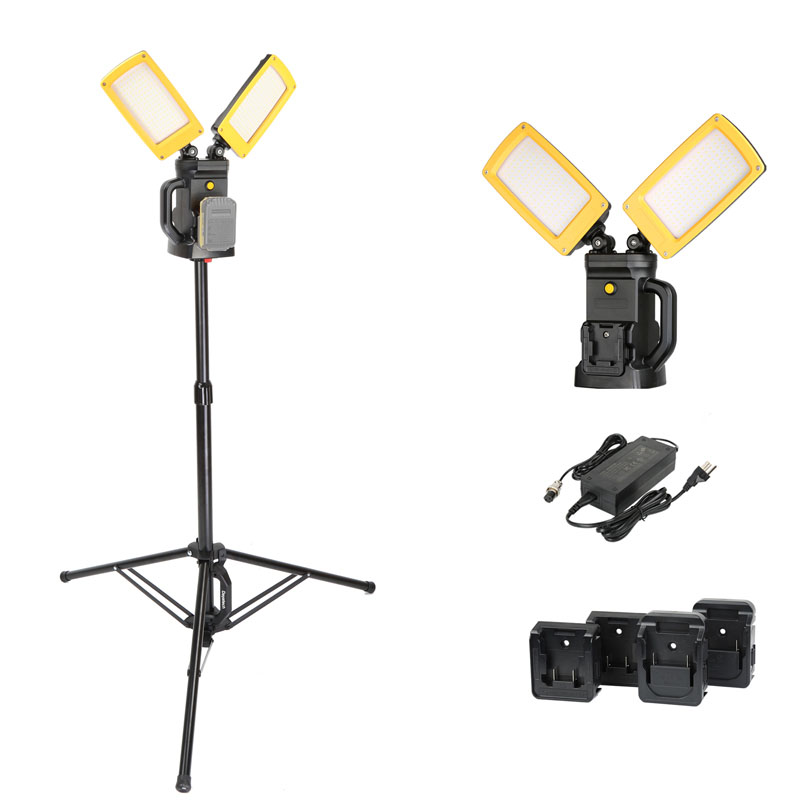
What a 100W Portable LED Work Light Really Means
When a work area becomes difficult to see, workers rarely need another decorative light. They need illumination that reaches the actual task: a fastener inside an engine compartment, a cable connection inside a control cabinet, a repair point beneath a vehicle, or a section of a construction site after daylight disappears.
The term 100W Portable LED Work Light describes a lighting product built around a 100-watt LED power rating and a portable form factor. The 100W figure indicates electrical power consumption, but it should not be treated as a direct measurement of brightness. Actual light output is normally expressed in lumens, while useful performance also depends on beam angle, LED efficiency, optical design, mounting position, and the distance between the lamp and the working surface.
This distinction matters when comparing products. Two lights can both be marked 100W but produce noticeably different illumination. Current commercial products show a wide range of specifications, including different lumen outputs, battery capacities, runtimes, beam angles, and charging systems.
How Bright Should a 100W Work Light Be?
Brightness is one of the first specifications buyers check, but wattage alone does not answer the question. Lumens describe the total visible light output, while the distribution of that light determines how effectively it reaches the working area.
For example, a broad flood beam can spread light across a workshop floor, while a narrower beam can concentrate illumination on a specific repair point. Neither approach is automatically better. The appropriate distribution depends on the task.
| Specification | What It Tells You | Why It Matters |
|---|---|---|
| 100W power | Electrical power rating | Helps indicate the electrical demand of the light |
| Lumens | Total light output | Useful for comparing overall brightness |
| Beam angle | How widely light spreads | Determines coverage and concentration |
| Color temperature | Appearance of the emitted light | Affects visual clarity and working comfort |
| CRI | How naturally colors are rendered | Important when identifying wires, finishes, paints, and components |
Commercial 100W portable models illustrate why buyers should compare the complete specification rather than a single number. Published examples range from approximately 1,549 lumens to more than 8,000 lumens, depending on the LED design, optical system, and product configuration.
Think About Useful Light, Not Just Maximum Light
An extremely bright light pointed directly at a reflective metal surface can create glare rather than better visibility. For technicians, this can make small components harder to inspect. A well-designed portable work light should therefore balance output with distribution and positioning.
Adjustable brightness can also be useful. A maximum setting may be appropriate for a large outdoor work area, while a lower setting can reduce glare and extend battery runtime during close-up maintenance.
How the Construction Affects Real-World Performance
A portable work light is frequently moved, placed on rough surfaces, transported in toolboxes, and exposed to dust. Its mechanical design therefore has a direct effect on how useful it remains after months of practical use.
Housing and Heat Dissipation
LEDs are efficient, but a high-power 100W lighting system still needs appropriate thermal management. Aluminum housings and heat-dissipating structures are commonly used to move heat away from the LED and electronic components. One published 100W work-light design, for example, uses an aluminum alloy housing specifically for durability and heat dissipation.
Thermal performance is particularly important when the light operates continuously. Poor heat management can affect component life and may reduce performance as temperatures rise.
Stand, Handle and Adjustment
Portability is not simply about low weight. A useful work light should also be easy to position. A stable folding stand, carrying handle, adjustable head, hanging point, or mounting option can save considerable time when the worker needs both hands for the job.
A stable base is especially important on construction floors, workshop benches, and outdoor ground where vibration or accidental contact can move an inadequately supported lamp.
How to Evaluate Battery Runtime
For a rechargeable 100W Portable LED Work Light, battery performance can determine whether the light is genuinely portable or simply convenient for short periods.
Runtime is affected by several factors, including battery capacity, LED efficiency, brightness setting, temperature, electronic controls, and battery condition. A published 100W COB work-site light, for example, lists approximately 4.5–5 hours at full output and 9–10 hours at 50% output.
This is why buyers should not evaluate runtime without knowing the brightness level at which the runtime was measured.
A More Useful Runtime Checklist
- Check the battery chemistry and rated capacity.
- Confirm whether the stated runtime is measured at maximum output or a reduced mode.
- Check charging time and the supplied charging method.
- Consider whether the light can operate while connected to external power.
- Check whether replacement batteries or service parts are available.
- Consider temperature conditions if the light will be used outdoors.
For products using lithium-ion batteries, charging and storage conditions should also be taken seriously. Singapore's Consumer Product Safety Office advises users to avoid damaged batteries and to use appropriate charging equipment because incorrectly used or damaged lithium-ion batteries can overheat and create fire hazards.
How to Read IP Ratings and Durability Features
Construction sites, vehicle workshops, warehouses, agricultural areas, and outdoor maintenance locations can expose lighting equipment to dust, splashes, and changing weather. This is where an enclosure protection rating becomes relevant.
IP65 is a commonly seen specification for portable LED work lights. Products carrying this rating are designed for protection against dust ingress and water jets from multiple directions; however, IP65 should not be interpreted as permission to submerge the lamp.
Several current portable work-light products specify IP65 protection for outdoor and wet-condition use.
Do Not Confuse Water Resistance With Submersibility
A work light that can tolerate rain is not necessarily designed to operate underwater. Charging ports, battery compartments, switches, and seals should be kept in the condition specified by the manufacturer. Users should also inspect the housing after impacts because cracks or damaged seals can compromise the original protection level.
In practical work environments, durability also includes impact resistance, stand strength, cable quality, switch design, lens protection, and resistance to repeated transport.
How Beam Coverage Changes the Working Area
Beam distribution can determine whether a light is useful for a whole workspace or mainly for one point. A broad beam is helpful when several workers need general illumination, while a more focused beam can be valuable for inspection and detailed maintenance.
Some portable 100W flood lights specify beam angles around 50 degrees, while other worksite products are designed with broader illumination patterns.
Consider the physical environment. A technician working beneath a truck may want concentrated light that reaches the repair area without flooding the entire garage. A construction team working on a larger open area may benefit from a wider distribution.
Adjustable positioning can partially solve this problem. Instead of depending entirely on the optical design, the user can change the height and angle to put more light exactly where it is needed.
How a 100W Portable Work Light Fits Different Jobs
The strongest reason to use a portable work light is flexibility. The same basic lighting platform can support different tasks when the output, mounting system, battery, and protection features are appropriate.
| Application | Main Lighting Requirement | Useful Features |
|---|---|---|
| Construction | Wide-area illumination | Stable stand, high output, weather resistance |
| Vehicle repair | Directed task lighting | Adjustable head, compact transport, multiple brightness levels |
| Workshop maintenance | Consistent close-range light | Stable base, good color rendering, heat management |
| Warehouse work | Portable supplementary lighting | Long runtime, carrying handle, broad beam |
| Outdoor maintenance | Reliable lighting in changing conditions | Weather-resistant housing, rechargeable battery |
| Emergency use | Immediate illumination without mains power | Fast deployment, battery backup, simple controls |
Portable LED flood lighting is also used as a practical workplace measure in areas where fixed lighting is insufficient. Singapore workplace guidance, for example, identifies portable LED flood lights as a way to improve illumination in poorly lit work areas while avoiding the trip hazards associated with electrical cables.
How to Check Specifications Before Purchasing
A product specification sheet should answer more than the basic question of whether a lamp is 100W. For commercial buyers, distributors, contractors, and project managers, the following information can make product comparison much easier.
Start With the Lighting Performance
- Rated power
- Luminous flux in lumens
- LED type or LED package
- Color temperature
- Color rendering information
- Beam angle
- Available brightness modes
Then Check the Portable System
- Battery type and capacity
- Expected runtime at different output levels
- Charging time
- Charging connector or power adapter
- Stand adjustment range
- Handle and carrying configuration
- Optional mounting accessories
Finally, Check Environmental Requirements
- IP protection rating
- Operating temperature
- Housing material
- Impact resistance where applicable
- Certification requirements for the target market
- Warranty and after-sales support
Published product data shows how widely these specifications can vary. For example, current products marketed as 100W portable work lights can differ considerably in lumen output, battery configuration, runtime, charging time, beam angle, dimensions, and protection rating.
Common Mistakes When Selecting a Portable Work Light
1. Looking Only at Wattage
A 100W label tells you the power rating, not the complete lighting performance. Compare lumen output, optical distribution, efficiency, and operating modes as well.
2. Ignoring the Real Runtime
A battery specification may look impressive until the runtime is checked at the actual brightness required for the job. Always confirm how the manufacturer measured the stated operating time.
3. Choosing a Light That Is Difficult to Position
High brightness cannot compensate for poor positioning. If the lamp repeatedly falls over, points in the wrong direction, or requires a separate stand for every task, workers may spend more time adjusting it than using it.
4. Treating IP65 as Waterproof Under All Conditions
IP protection has defined test conditions. It does not mean that every product can be submerged, pressure-washed, or left outdoors indefinitely.
5. Forgetting Heat and Charging Conditions
A powerful LED system and rechargeable battery both require proper thermal and charging management. Follow the manufacturer's charging instructions and do not use damaged charging cables or battery packs.
How to Keep a Portable LED Work Light Working Longer
Good maintenance does not need to be complicated. The goal is to prevent small problems from becoming failures during an important job.
- Clean the lens regularly. Dust and dirt can reduce useful light output.
- Inspect the housing. Look for cracks, loose parts, or signs of impact.
- Check charging components. Replace damaged cables or connectors rather than continuing to use them.
- Keep charging ports dry. Do not connect a charger when the relevant port is wet.
- Avoid covering ventilation or heat-dissipation areas. The light needs an appropriate path for heat to escape.
- Store the lamp correctly. Avoid extreme heat, moisture, and unnecessary mechanical pressure.
- Follow battery instructions. Do not modify or open an integrated battery pack unless the manufacturer specifically provides an approved service procedure.
Safety documentation for rechargeable work lights commonly emphasizes inspecting the product before use, keeping charging equipment dry, avoiding damaged batteries, and following the supplied charging method.
Frequently Asked Questions
Is a 100W Portable LED Work Light bright enough for construction work?
It can be suitable for construction and maintenance applications when the optical design and lumen output match the required area. Do not judge suitability from 100W alone; check the actual lumen rating, beam distribution, mounting height, and intended working distance.
How many lumens should a 100W portable work light have?
There is no single lumen figure that suits every application. Current products marketed as 100W portable work lights show substantially different lumen ratings, so the correct target depends on whether the light is intended for close-up maintenance, workshop illumination, or larger outdoor areas.
How long can a rechargeable 100W work light run?
Runtime depends on battery capacity and operating mode. Some published 100W rechargeable work lights provide around 4–5 hours at full output and significantly longer operation at reduced brightness.
Is IP65 suitable for outdoor work?
IP65 is commonly specified for outdoor portable work lights because it provides dust protection and resistance to water jets under the applicable test conditions. It should not be treated as a submersible rating.
Can a 100W portable LED work light replace fixed workshop lighting?
It can provide strong supplementary lighting and may cover a temporary work area effectively, but whether it can replace fixed lighting depends on the size, layout, required illumination level, and duration of the work. Portable lighting is particularly useful when the task location changes frequently.
What battery information should buyers request from a supplier?
Ask for battery type, rated capacity, nominal voltage, charging time, tested runtime at different brightness levels, charging method, operating temperature range, and available protection features. For commercial purchasing, it is also useful to confirm battery replacement and after-sales arrangements.
What should distributors consider when sourcing a 100W Portable LED Work Light?
Distributors should look beyond the product's headline wattage. Consistent specifications, component quality, certifications for the target market, battery documentation, packaging, sample availability, production capacity, warranty terms, and customization options can all affect the suitability of a supplier.
Making the Light Work for the Job
The most useful 100W Portable LED Work Light is not necessarily the one with the largest number printed on its specification sheet. A practical solution combines sufficient light output with controlled beam distribution, stable positioning, dependable battery performance, suitable environmental protection, manageable heat, and a housing that can withstand repeated handling.
For professional users, these details become especially important when the light is used night after night or moved between different work areas. Taking the time to compare the complete specification can prevent common problems such as inadequate runtime, excessive glare, unstable positioning, poor weather resistance, or insufficient illumination.
Need a Portable Lighting Solution for Your Application?
Ningbo Dayatech Technology Co., Ltd. focuses on practical LED lighting solutions for professional and commercial applications. If you are sourcing a 100W Portable LED Work Light for construction, maintenance, workshops, outdoor work, emergency lighting, or distribution, the product specification should be matched to your actual operating conditions.
Share your required power, lumen output, battery runtime, charging method, protection rating, mounting requirements, target market, and order quantity with the Dayatech team. This makes it easier to discuss a suitable configuration and avoid unnecessary specification compromises.
Contact us for product details, samples, quotation requests, customization requirements, or further technical information.