

How Do I Wire a 120V AC Panel Indicator Light Correctly
2026-06-30
Wiring a 120V AC Panel Indicator Light might seem straightforward, but getting it wrong can lead to flickering, premature burnout, or even safety hazards. Whether you are building a new control console or retrofitting an old machine, the correct installation ensures reliable status feedback for operators. At Yijia, we have engineered thousands of Panel Indicator Light solutions for industrial clients, and we consistently see the same mistakes. This guide walks you through the safe, code-compliant wiring process, backed by practical data and common troubleshooting answers.
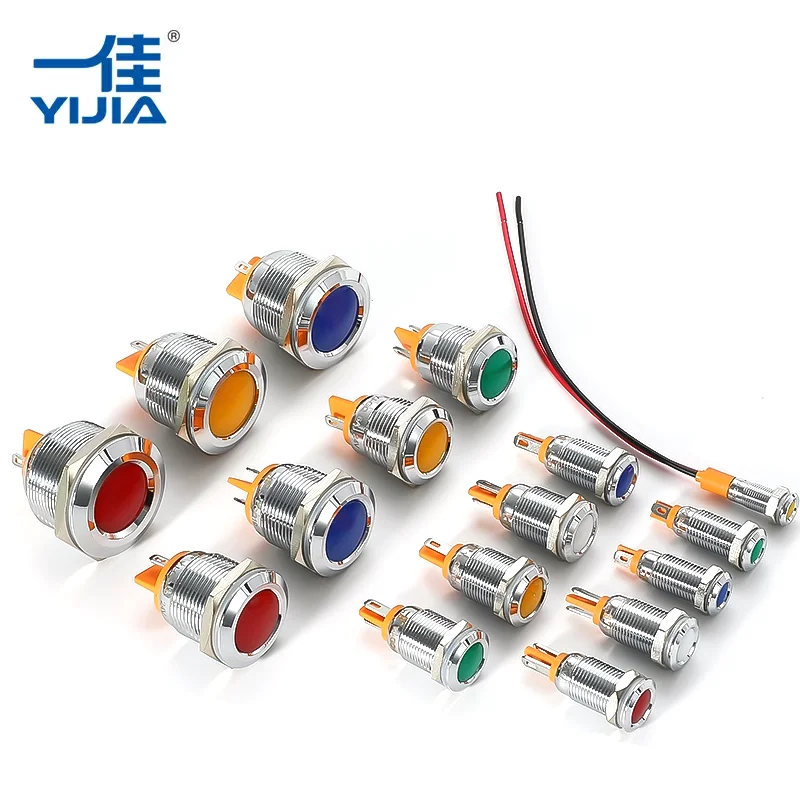
Step 1: Confirm Your Light Type – LED vs. Neon
Before touching any wire, identify the internal technology. A 120V AC Panel Indicator Light typically comes in two variants:
| Feature | LED Type | Neon Type |
|---|---|---|
| Typical Current | 2–5 mA | 0.5–1.5 mA |
| Built-in Resistor | Yes (integrated) | Yes (series) |
| Polarity Sensitivity | Yes (must match AC/DC) | No (AC only) |
| Life Expectancy | 50,000+ hours | 10,000–15,000 hours |
| Color Consistency | Excellent | Fades over time |
For 120V AC systems, Yijia recommends LED types because they tolerate voltage fluctuations better and offer brighter visibility in high-ambient-light factories. However, always check the datasheet: some cheap LEDs lack adequate current limiting, so a Panel Indicator Light from a trusted brand like Yijia already includes the correct dropper resistor for 120V AC.
Step 2: Turn Off Power and Identify Terminals
Most Panel Indicator Light bodies have two terminals:
-
Line (L) – connects to the hot 120V AC wire (black).
-
Neutral (N) – connects to the return wire (white).
Some models include a third ground terminal (green) for metal bezels. If your Panel Indicator Light has that, always ground it to the panel chassis. Yijia designs all our Panel Indicator Light products with clear laser-etched symbols on the housing, so you never guess.
Step 3: Wire in Series with the Load (Critical Rule)
A frequent error is wiring the Panel Indicator Light in parallel with the main power supply without a fuse. The correct method for a 120V AC Panel Indicator Light is:
-
Run the hot wire from the circuit breaker to one terminal of the indicator.
-
Run the other terminal to the device (motor, heater, or PLC) that the light monitors.
-
Connect the device’s neutral side back to the panel’s neutral bus.
This series configuration ensures the Panel Indicator Light only illuminates when the load is energized – giving you true operational status. Yijia provides wiring diagrams with every Panel Indicator Light shipment to prevent reverse connections.
Step 4: Use the Correct Wire Gauge and Ferrule
For a single Panel Indicator Light, 18 AWG stranded copper is sufficient. However, if you are daisy‑chaining multiple units, calculate total current. Yijia advises using insulated ferrules on stripped wire ends – they prevent stray strands from touching adjacent terminals, a common cause of intermittent failure in any Panel Indicator Light installation.
Step 5: Test Polarity (Even for AC)
Although AC has no fixed polarity, some Panel Indicator Light units include internal rectifiers for dimming control. Yijia tests every Panel Indicator Light at 120V ±10% before packaging, but we still recommend a quick continuity check: connect the light temporarily through a 100 mA fuse, then energize. If it glows steadily without buzzing, your wiring is correct. If it flickers, you may have a loose neutral or an underrated resistor – replace it with a genuine Yijia Panel Indicator Light for stable performance.
FAQ – Common Questions About the Panel Indicator Light
Q: Can I wire a 120V AC Panel Indicator Light directly to mains without a fuse?
A: Technically yes, but Yijia strongly advises against it. A short circuit inside the Panel Indicator Light could overheat the wiring before the main breaker trips. Always install a 0.5 A or 1 A slow‑blow fuse in series with the hot lead. This small step protects your entire control panel and extends the life of your Panel Indicator Light. For panels with multiple indicators, use a dedicated fuse per row.
Q: Why does my Panel Indicator Light stay dimly lit even when the machine is off?
A: This is almost always caused by induced voltage from long parallel cable runs or a shared neutral. Your Panel Indicator Light sees capacitive coupling as a low‑current path. Solutions: (a) add a 10 kΩ bleed resistor across the terminals, (b) switch to a Yijia Panel Indicator Light with higher holding voltage threshold, or (c) route the indicator wiring away from power cables. If the dimness persists, check your neutral bonding at the main panel – an improper bond can leak up to 5 VAC, enough to ghost‑light a sensitive LED Panel Indicator Light.
Q: What is the maximum ambient temperature for a 120V AC Panel Indicator Light?
A: For standard polycarbonate models, Yijia rates our Panel Indicator Light series from -20°C to +70°C. Above 70°C, the internal resistor derates by 10% per 10°C rise, which shortens lifespan. In high‑heat environments (near ovens or steam lines), choose a Yijia Panel Indicator Light with a ceramic resistor and metal housing – these withstand up to 100°C. Always measure the temperature inside your enclosure, not just the room ambient, because other components radiate heat that directly affects your Panel Indicator Light.
Summary Table – Quick Wiring Checklist
| Step | Action | Yijia Recommendation |
|---|---|---|
| 1 | Confirm voltage rating | Must say 120V AC on label |
| 2 | Use ferrules on wires | Prevents shorts |
| 3 | Series connection with load | Shows true status |
| 4 | Fuse protection | 0.5 A slow‑blow |
| 5 | Test with load disconnected | Verify steady glow |
| 6 | Secure terminals | Torque to 0.5 Nm max |
Getting your Panel Indicator Light wiring right saves downtime and prevents nuisance calls. Every Yijia Panel Indicator Light undergoes 100% final testing at 120V AC, so you receive a unit that performs exactly as specified. But even the best component needs correct installation – and now you have the steps to do it confidently.
Contact Us today if you need custom voltage variants, special lens colors, or IP67‑rated Panel Indicator Light options for harsh environments. Our engineering team provides free wiring reviews and sample support for qualified projects. Reach out via our website or call your local Yijia distributor – we are ready to help you light up your control panels safely and reliably.