

How Do Clutch Release Bearings Work and Why Do They Fail?
2026-06-24
Abstract
Clutch release bearings play a critical role in manual transmission systems by enabling smooth engagement and disengagement of the clutch. Despite their relatively small size, these components directly influence driving comfort, transmission efficiency, and system longevity. This article explains how clutch release bearings operate, why they fail, how to recognize early symptoms, and what maintenance practices can extend their service life. It also provides a practical selection guide and installation insights for automotive professionals and vehicle owners seeking reliable performance.
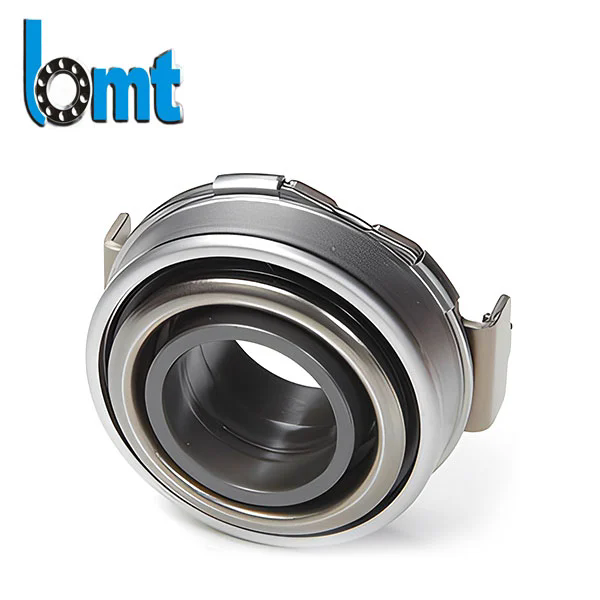
Table of Contents
- 1. Overview of Clutch Release Bearings
- 2. Working Principle
- 3. Common Symptoms of Failure
- 4. Causes of Bearing Failure
- 5. Maintenance and Diagnosis
- 6. Selection Guide
- 7. Installation Best Practices
- 8. Industry Applications
- 9. Why Bearing Quality Matters
- 10. FAQ
1. Overview of Clutch Release Bearings
A clutch release bearing, also known as a throw-out bearing, is a mechanical component used in manual transmission systems to facilitate clutch operation. It acts as an interface between the rotating clutch assembly and the stationary hydraulic or mechanical clutch actuation system.
When the driver presses the clutch pedal, the bearing moves forward to apply pressure on the pressure plate diaphragm spring, disengaging the clutch and allowing gear changes. When the pedal is released, the bearing retracts, and the clutch re-engages.
- Located between the clutch fork and pressure plate
- Designed to handle axial loads
- Operates under high temperature and rotational stress
2. Working Principle
The clutch release bearing operates on the principle of converting linear pedal force into controlled axial movement. This motion ensures smooth separation of the engine and transmission during gear shifting.
Key operational steps include:
- Driver presses clutch pedal
- Hydraulic or cable system transfers force to clutch fork
- Clutch fork pushes release bearing forward
- Bearing contacts diaphragm spring
- Clutch disengages for gear change
During operation, the bearing must rotate or remain stationary depending on design type, while enduring continuous pressure cycles.
3. Common Symptoms of Failure
Early detection of clutch release bearing issues is essential to avoid transmission damage. Common symptoms include:
- Unusual noise when clutch pedal is pressed
- Grinding or squealing sounds during gear shifting
- Vibration felt through clutch pedal
- Difficulty engaging gears
- Clutch slipping or inconsistent engagement
In many cases, noise disappears when the clutch pedal is released, which is a strong indicator of bearing wear.
4. Causes of Bearing Failure
Clutch release bearings fail due to a combination of mechanical stress, improper installation, and environmental factors.
- Insufficient lubrication: Leads to increased friction and heat buildup
- Continuous riding of clutch: Keeps bearing under constant load
- Misalignment: Causes uneven wear on bearing surfaces
- Low-quality materials: Poor hardness and heat resistance
- Contaminants: Dust or debris entering the clutch housing
High-performance driving and heavy-duty applications further accelerate wear if the bearing is not designed for such conditions.
5. Maintenance and Diagnosis
While clutch release bearings are generally not serviceable, proper diagnosis and preventive maintenance of surrounding components can extend their lifespan.
Recommended practices:
- Inspect clutch system during routine transmission servicing
- Check for hydraulic leaks in clutch master/slave cylinders
- Avoid excessive clutch pedal resting
- Replace clutch kit components together when worn
Technicians often diagnose bearing issues by listening for noise changes during clutch pedal actuation.
6. Selection Guide
| Criteria | Standard Bearing | High-Performance Bearing | Heavy-Duty Bearing |
|---|---|---|---|
| Material | Basic steel | Heat-treated alloy | Reinforced alloy + ceramic options |
| Load Capacity | Moderate | High | Very high |
| Lifespan | Standard | Extended | Long service life |
| Application | Passenger cars | Sport vehicles | Commercial trucks |
7. Installation Best Practices
Correct installation is essential to ensure optimal clutch release bearing performance. Improper fitting can significantly reduce lifespan.
- Always replace bearing with full clutch kit when possible
- Ensure alignment of clutch fork and input shaft
- Avoid applying grease to sealed bearings unless specified
- Torque components to manufacturer specifications
- Check for smooth axial movement before sealing transmission
Professional installation reduces the risk of premature failure and ensures consistent clutch feel.
8. Industry Applications
Clutch release bearings are widely used across multiple industries beyond passenger vehicles.
- Automotive manufacturing
- Commercial transportation
- Agricultural machinery
- Construction equipment
- Performance racing vehicles
Each application demands different load tolerances and durability levels depending on operational intensity.
9. Why Bearing Quality Matters
The reliability of a clutch system depends heavily on the quality of its release bearing. Inferior components can lead to system-wide failures, increased maintenance costs, and unsafe driving conditions.
Manufacturers such as BMT Bearings Co., Ltd. specialize in producing high-precision clutch release bearings designed for durability, thermal resistance, and smooth engagement performance. Their engineering focus ensures consistent quality across automotive and industrial applications.
For businesses seeking reliable sourcing and technical support, BMT Bearings Co., Ltd. provides a full range of clutch release bearing solutions tailored to different vehicle categories and operating conditions.
👉 Contact us to explore product specifications, customization options, and bulk supply solutions for your business needs.
10. FAQ
Q1: How long does a clutch release bearing last?
Typically between 80,000 to 150,000 kilometers depending on driving habits and system quality.
Q2: Can I drive with a noisy release bearing?
It is not recommended. Continued driving may damage the clutch pressure plate and transmission components.
Q3: Should the bearing be replaced with the clutch kit?
Yes, replacing it together ensures system compatibility and reduces future labor costs.
Q4: What is the main reason for premature failure?
Improper installation and continuous clutch riding are the most common causes.
Q5: Are all clutch release bearings the same?
No, they vary significantly in material, load capacity, and application design.
Clutch release bearings may be small components, but their influence on drivetrain performance is substantial. Understanding their function, failure patterns, and correct handling practices is essential for maintaining vehicle reliability and efficiency across all operating conditions.